



Australia’s top 10 woody weeds and how to control them
Table of Contents
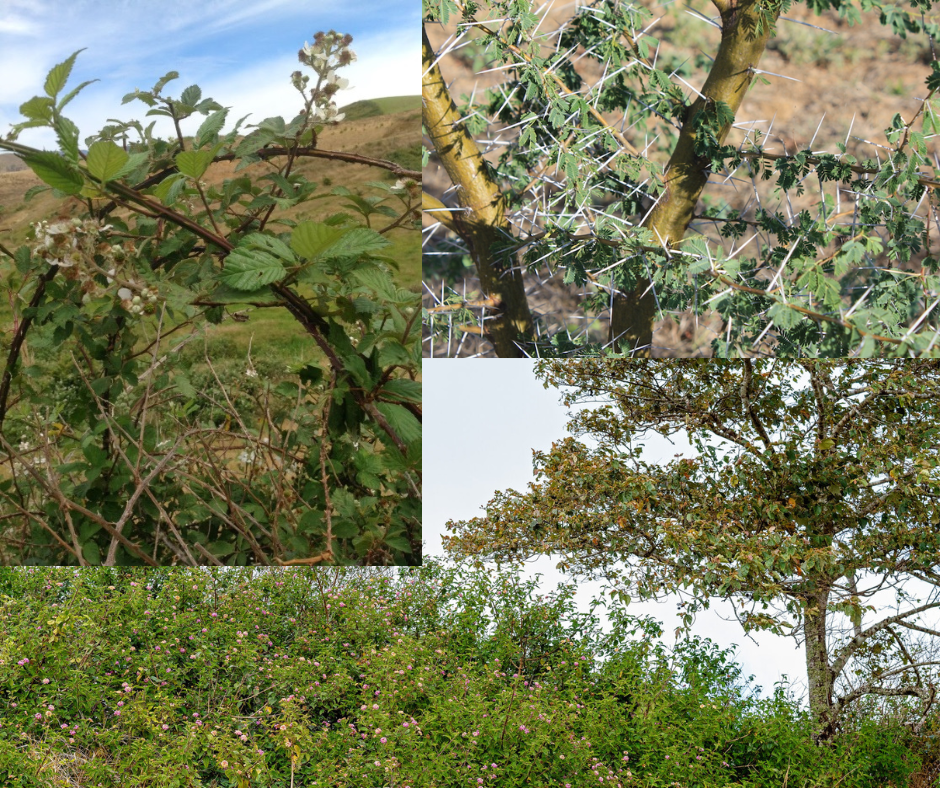
Australia is home to almost 400 weed species, many of which are noxious and woody weeds. Thanks to their persistent, pervasive, and destructive nature, these plants pose a constant problem for farmers, property managers, governments, communities, and individuals.
To protect your land assets against the impacts of woody weeds, you’ll need a comprehensive, long-term strategy that blends herbicide control with good management practices.
Keep reading to learn more about the top 10 prolific woody weeds in Australia, including advice on how to treat them for optimal, long-term control suited to our country’s specific conditions.
What is a woody weed?
Woody weeds are invasive, often perennial plants like shrubs, trees, or woody vines. They tend to be introduced species, and are typified by woody stems and branches with a thick root system.
They are fast-growing, adaptive, and extremely resilient, thus making them tough to eradicate. Woody weeds can resprout with ease after cutting and burning, and are rarely controllable by slashing and pulling alone.
Why are woody weeds dangerous?
Because of their aggressive nature, woody weeds can quickly invade and overrun crop and pasture areas, native bushland, and other sites of significance. They then compete with crops, pastures, and native vegetation for light, water, and nutrients to survive, often leading to the destruction of desirable plants. If woody weeds are allowed to spread, land assets like crops and pasture yields, soil quality, waterways, and biodiversity will be put under even more strain.
What are the most common woody weeds in Australia?
According to the Australian Department of Agriculture, Fisheries and Forestry, 32 of Australia’s 398 weed species have been classified as Weeds of National Significance. Of these, there are 10 woody weeds that repeatedly cause concern across the country.
1. Lantana (Lantana camara)
What it looks like: Lantana is a sprawling shrub plant with woody, dense stems that can grow up to 4m tall. It has waxy leaves and grows into dense thickets, which makes it hard to access and manage. It grows pink, red, yellow, or orange flowers that in some plants, develop into small, round berries that turn purple-black once ripe.
Where it’s found: This woody weed is extremely common across most of eastern Australia, particularly in the coastal and hinterland regions of Queensland and New South Wales.
How it spreads: Lantana is spread via its berries. These are consumed by birds, which then spread the seeds to other areas, allowing the plant to flourish under the right conditions. Once rooted, this noxious weed forms dense thickets that easily take over pastures and bushlands.
Key dangers: In addition to the strain put on the natural environment, lantana can be harmful to cattle if consumed. This woody weed spreads rapidly, so control is critical.
How to control lantana: There are a few ways to successfully get lantana under control, including:
- Mechanical methods: Slashing or burning can provide temporary results, but lantana resprouts easily, so it must be treated with herbicides afterwards to ensure efficacy.
- Herbicides: For optimal results, we recommend using a foliar spray formulated with aminopyralid, triclopyr, and picloram, combined with a suitable penetrant. Penetrants help the herbicide stick to lantana’s shiny, waxy leaves without runoff. We also suggest adding a spike to this mix with a product containing metsulfuron-methyl.
- Ongoing management: As lantana seedlings emerge, administer a follow-up spray. By treating sprouts while they are young, you’ll assist with ongoing control and prevent further outbreaks.
2. Blackberry (Rubus fruticosus agg.)
What it looks like: Blackberry is a shrub with arched, sprawling woody canes that are red or purple in colour and can grow up to 7m in size. These stems have thorns that form thickets, and white or pink flowers that form clusters at the end of branches that then turn into berries. Blackberries start as green, then turn reddish-black once ripe, when the berry can be eaten.
Key dangers: Due to blackberry’s thorns and dense thickets, this bush can easily harbour pests, block access to waterways, and take over pastures and desirable plants.
How to control blackberry:
- Mechanical methods: Slashing or burning can provide temporary results, but to ensure resprouting doesn’t occur, this must be followed up with herbicide application.
- Herbicides: For your best chance at control, select a foliar spray containing aminopyralid, triclopyr, and picloram. Blackberry bushes have serrated, hairy leaves, which demands the use of a penetrant to ensure the herbicide sticks to the leaves and can do its job. Similarly to lantana control, consider adding a metsulfuron-methyl spike to your mix.
- Ongoing management: If using fire to clear old growth, ensure you follow up with additional herbicide on the areas that resprout whilst they’re still young and easy to eradicate. Burning too early after herbicide application can cause recurrence.
3. Gorse (Ulex europaeus)
What it looks like: Gorse is a dense, spiny, and woody evergreen shrub with rigid, spine-like leaves. The leaves are dark green, whereas its flowers (present in autumn and spring) are bright yellow and pea-shaped with a coconut-like scent. It can grow to between 2 and 4m tall, and produces hard, hairy pods that are dark brown to black with small, shiny seeds. Its distinctive spines also have a strong coconut scent, which makes this woody weed very easy to identify.
Key dangers: Gorse forms thickets that can exclude stock, especially around water points and fuel fires. It is extremely resilient due to the seed pods’ ability to germinate, which means it may persist for years or even decades.
How to control gorse:
- Mechanical methods: Slashing and burning can provide short-term results, but this must be followed up with herbicide treatment to prevent resprouting.
- Herbicides: As per lantana and blackberry treatment, select a foliar spray formulated with aminopyralid, triclopyr, and picloram, as well as a penetrant to support infiltration through the bush’s hard, spiny, hairy leaves. Add a metsulfuron-methyl spike to the mix for best results.
- Ongoing management: Always follow up burning by applying more herbicide to sprouted areas while they are still young.
4. Cat’s claw creeper (Dolichandra unguis-cati)
What it looks like: Cat’s claw creeper is a large, aggressive woody vine with claw-like tendrils that form hooks, compound leaves, and bright yellow bell-shaped flowers. The flowers later form a long, flat, narrow pod containing numerous seeds.
Key dangers: This noxious weed smothers trees and other vegetation to create a dense ground cover. It is invasive and persistent thanks to its vigorous, tough-to-control underground tubers.
How to control cat’s claw creeper:
- Mechanical methods: You can cut the vine at the base, however this will only provide temporary control by killing the top of the plant. Without herbicide use, the underground tubers will resprout and the weed will continue to spread.
- Herbicides: Opt for a ready-to-use herbicide gel like Vigilant II Herbicide Gel, which contains picloram and aminopyralid to control scrambling vines, creepers, and other damaging woody weeds. These powerful, proven ingredients provide immediate knockdown as well as a residual effect for 2 years post-application. Additionally, Dicamba 500 is registered for use as a foliar spray on cat’s claw creeper. Total plant death may take up to 6 months.
- Ongoing management: Follow-up treatments will be required to curb the spread of cat’s claw creeper’s persistent underground tubers.
5. Rubber vine (Cryptostegia grandiflora)
What it looks like: Rubber vine is a woody shrub or climbing vine with purple-pink flowers and dark, glossy, leathery leaves arranged in opposite pairs. A distinctive feature is its grey-brown stems with raised, wart-like spots, as well as its trumpet-shaped flowers. The plant produces large, rigid seed pods that also grow in pairs. When cut, this woody weed releases a white, milky sap.
Where it’s found: This vine is widespread in northern Queensland.
Key dangers: Rubber vine seeds are spread by wind or water runoff, which makes it extremely difficult to prevent the surrounding land from becoming infested. It smothers other vegetation by forming thick, dense infestations. It is also very toxic to livestock.
How to control rubber vine:
- Fire: This is a very effective control method when done in combination with mechanical control and herbicide use. Successive annual burns are recommended – the first will open up the land to increase pasture and grass growth, and the second will clear up regrowth.
- Mechanical methods: Medium-to-large scattered infestations can be slashed close to the ground and treated with herbicides. More dense infestations must be stick-raked or blade-ploughed during the winter months to reduce the bulk of infestation and give the pasture time to establish after being sown. Windrows should be burned to control residual seeds.
- Biological control: Two biological control agents – rubber vine rust (Maravalia crytostegiae) and rubber vine moth (Euclasta whalleyi) have been proven to be successful when established. The efficacy of these on rubber vine depends on its ability to establish itself. Both agents cause defoliation and sap the plant of its energy, significantly reducing seed production.
- Herbicides: There are four different ways to use herbicides to treat rubber vine:
- Foliar sprays containing triclopyr and picloram with a penetrant
-
-
- Basal bark application using Access Herbicide with diesel or a bio-safe spraying oil
- Cut stump treatment with triclopyr 600 plus diesel or a bio-safe spray oil adjuvant
- Soil application with hexazinone or tebuthiuron pellets
-
- Ongoing management: Due to rubber vine’s extremely pervasive nature, it’s essential to inspect your property for infestations regularly, particularly along creeks and gullies. All control of rubber vine will require follow-up treatments to prevent further spread from continued seed pod germination. Dense infestations can be costly and difficult to control, so it’s always best to treat them before the infestation takes hold.
6. Prickly acacia (Vachellia nilotica ssp. indica)
What it looks like: Prickly acacia is a thorny shrub or small tree that can grow between 5 and 10m tall. It has paired and stout thorns, and produces bright yellow, ball-shaped flowers year-round (but particularly between March and July in Australia). Its green leaves appear fern-like and feathery yet narrow. Prickly acacia also develops pods that are flat and grey when ripe.
Where it’s found: This woody weed invades rangelands throughout Australia, but is particularly prevalent in Queensland.
How it spreads: Seeds can be spread by livestock, through the digestion of mature pods, and by water movement.
Key dangers: Prickly acacia is a Category 3 restricted native plant that can form thorny thickets if left unchecked, potentially interfering with pasture production, mustering, and stock movement. It affects cattle and livestock by reducing pasture productivity, blocking water access, and changing soil ecology, which can facilitate erosion and threaten biodiversity.
How to control prickly acacia:
- Mechanical methods: Methods like grubbing, blade ploughing, pushing, stick-raking, and double-chain pulling can be used for dense thickets; however, this must always be followed by herbicide use for total control.
- Biological control: Six insects have been introduced to Australia as biological control for prickly acacia, with two of them – a beetle and a leaf-feeding caterpillar – now providing some benefits. The beetle consumes the pods, whereas the caterpillar attacks the plants. While these have not yet been effective in western Queensland, results are promising around coastal areas.
- Herbicides: A range of herbicide application methods can be used to control prickly acacia, including basal bark treatment, stem injection, and soil application. For basal bark treatment, use a mixture of triclopyr and picloram combined with diesel or a good spray oil penetrant. For soil application, tebuthiuron pellets or hexazinone liquid herbicide are recommended.
- Ongoing management: Follow up with more herbicide on any areas that resprout after burning is conducted to ensure regrowth is controlled.
7. Bitou bush (Chrysanthemoides monilifera)
What it looks like: This attractive perennial shrub has bright green leaves and yellow daisy-like flowers. Growing up to 5m in height, it features an abundance of stems and branches that develop into woody upper stems that are often purple in colour. Leaves are tear-shaped and serrated. The plant also produces fruit with one seed and a green, fleshy outer that turns from brown to black when mature.
Where it’s found: While bitou bush is native to South Africa, it now occurs in most states of Australia. It’s very dominant along coastlines along the eastern seaboard, particularly in New South Wales, as it enjoys sandy soil. It often invades coastal dunes and forests. Bitou bush seeds can germinate at any time of the year, but particularly after good rainfall.
How it spreads: This woody weed spreads rapidly when birds eat its fruit and pass the seed. It then outcompetes native vegetation by forming a thick, blanket-like coverage that prevents the establishment of native seedlings.
Key dangers: Thanks to the quantity (up to 50,000 seeds per plant) and longevity (up to 2 years) of its seeds, bitou bush spreads rapidly and takes root easily. As a result, it can pose an extreme competition risk to native flora and fauna.
How to control bitou bush:
- Mechanical methods: Cultivation is an effective method for controlling bitou bush. Slashing is also used, but is less beneficial, as regrowth occurs from the stump. Manual removal by pulling can also be effective in some cases, but this may stimulate seed germination.
- Biological control: Nine biological agents have been approved and released by a nationally coordinated control program and found to have an impact on seed production. However, progress is slow, and some states are using additional methods like herbicides to control localised outbreaks and ensure eradication.
- Herbicides: It’s recommended to treat infestations of bitou bush while they are small, young, and before the seed turns black (rendering them sterile). We suggest using a foliar spray containing 75-D herbicide or the active ingredient metsulfuron-methyl in addition to a good penetrant.
- Ongoing management: Follow-up treatments should be conducted once seeds spread and germinate and new plants emerge. Continue to monitor and treat new plants to prevent major infestations.
8. Parkinsonia (Parkinsonia aculeata)
What it looks like: Parkinsonia is a small, hairless tree that can grow up to 10m in height. Its woody branches are thin and zig-zagged in shape with sharp spikes, where the leaves are short and have a spine-tipped stalk. Branches can be 20 to 40cm in length. Parkinsonia develops fragrant, five-petalled yellow flowers with long, drooping stalks. Its seed pods are pencil-like and approximately 5 to 10cm long. They contain oval-shaped seeds with a very thick, hard coating.
How it spreads: This woody weed spreads predominantly through flood waters or via mud sticking to animals as they move about a property. It forms dense thickets along water points and often provides a haven for feral animals.
Key dangers: When Parkinsonia spreads and develops into thickets, it can reduce pasture production, restrict stock from accessing drinking water, and make mustering very difficult.
How to control Parkinsonia:
- Fire: A slow-burning grass fire is ideal for accessing parkinsonia’s stump and seed pods on the ground, and will cause the most damage by rendering the seeds sterile. Restricting grazing in these areas to build fuel load is advised.
- Mechanical methods: Pushing or pulling out the weed by mechanical means is very effective, but should always be followed up by herbicide application.
- Herbicides: This is the most traditional method for controlling parkinsonia. Application options include basal bark and stem injection using a mixture of aminopyralid, triclopyr, and picloram (alongside a quality penetrant) and soil-applied treatments with hexazinone herbicide or tebuthiuron pellets.
- Ongoing management: If using fire to clear old growth of parkinsonia, be sure to follow up by applying additional herbicide to the areas that have sprouted while they are still young and easy to eradicate.
9. Madeira vine (Anredera cordifolia)
What it looks like: Also known as potato vine or lamb’s tail vine, this vigorous climbing vine is characterised by its fleshy, heart-shaped leaves that are roughly 4 to 5cm in length. It also features flower spikes that are typically around 10cm long, with individual flowers that resemble a lamb’s tail, hence its alternative name. The vine produces small, light brown tubers which, when they fall to the ground, can sprout again. These tubers look like potatoes.
Where it’s found: Madeira vine prefers warmer temperatures and sub-tropical climates, and is primarily found in farms, bush areas, the edges of rainforests, roadsides, and national parks.
Key dangers: This woody weed creates a dense blanket coverage that can take over desirable vegetation, smother trees, and lead to soil erosion.
How to control it:
- Herbicides: The best and most efficient way to control Madeira vine is through herbicides, as mechanical pushing and pulling can disturb underground tubers and seeds, spreading the vine further. There are a few recommended herbicide application methods to consider:
-
-
- Basal bark treatment with fluroxypyr, mixed with diesel or a bio-safe herbicide carrier
- Cut stump treatment with Vigilant II Gel
- Foliar spray application with a product containing either fluroxypyr or triclopyr and picloram, alongside a good penetrant
-
- Ongoing management: Like most woody and noxious weeds, long-term management is required to control Madeira vine, as tubers can survive for years. Conduct a follow-up treatment as tubers spread and germinate, and new plants emerge. Always continue to monitor and treat reshoots to avoid out-of-control infestations.
10. African boxthorn (Lycium ferocissimum)
What it looks like: African boxthorn is a woody shrub that stands around 5m tall with stiff branches covered in spines or thorns. Its leaves are bright green and rounded at the top, and taper at the bottom. White to pale mauve flowers appear alongside green berries that turn orange to red when ripe. Its seeds are light brown, flat, and numerous.
Where it’s found: Native to southern Africa, in Australia, this woody weed is commonly found in better soil areas, particularly along dry creek beds. Seeds can germinate all year round and quickly establish.
Key dangers: African boxthorn is a very aggressive weed that competes with pastures, crops, and other desired vegetation.
How to control it:
- Mechanical methods: Grubbing or bulldozing can be effective to remove shrubs, but regrowth from root fragments and resprouting must be treated with herbicides.
- Herbicides: There are three recommended application methods for addressing African boxthorn:
-
-
- Basal bark treatment with a product containing triclopyr or picloram, mixed with diesel or a spray-based oil penetrant
- Cut stump treatment using the same products
- Soil-based application using tebuthiuron pellets or glyphosate (with a permit from the APVMA via splatter gun)
-
- Ongoing management: If using mechanical methods to clear old growth, always follow up with a herbicide on any areas that resprout. It’s best to do this while the plant is still young and easy to eradicate.
General tips for controlling woody weeds
Woody weeds require long-term planning for effective control, as it can take many years of follow-up treatments to achieve total eradication – a ‘one and done’ approach does not apply to these weeds. For best results, monitor your property vigilantly and address woody weeds while they’re young. Seedlings, young plants, and resprouting areas are much easier to contain and control than established, mature thickets.
Always ensure you choose the correct herbicide for the weed you are aiming to control, and refer to the manufacturer’s instructions prior to application for directions for use. Where appropriate, employ mechanical methods for bulk infestations, followed by herbicides to contain resprouting and further spread.
Woody weeds are among the most challenging and complex weeds to control, whether it be lantana in gullies, prickly pear invading outback pastures, or blackberries blocking waterways and creeks.
While woody weeds are challenging and demand regular, persistent control, with the right approach and a combination of methods, it’s possible to keep even the worst infestations under wraps. If you’re not sure about which herbicide to use for your specific woody weed needs, get in touch with Specialist Sales’ team of experts – we’re here to help.
About the author