



Herbicides
Showing 13–24 of 196 results
-

Ray 675 WG Herbicide
$255.00(GST Incl.)Out of Stock
-

Scrubba Herbicide
$425.00(GST Incl.)Out of Stock
-

Surefire Amine 625 Herbicide
Price range: $70.00 through $199.00(GST Incl.) -

Nutless Halosulfuron 750WG Herbicide
$225.00(GST Incl.) -

Ozcrop Dicamba M Herbicide
Price range: $105.00 through $240.00(GST Incl.) -

Militate MSMA Herbicide
$185.00(GST Incl.) -

Picloram Herbicide
$495.00(GST Incl.)Out of Stock
-

Shredder Herbicide (Triclopyr & Picloram)
$475.00(GST Incl.)Out of Stock
-

Weedmaster DST Herbicide
$215.00(GST Incl.) -
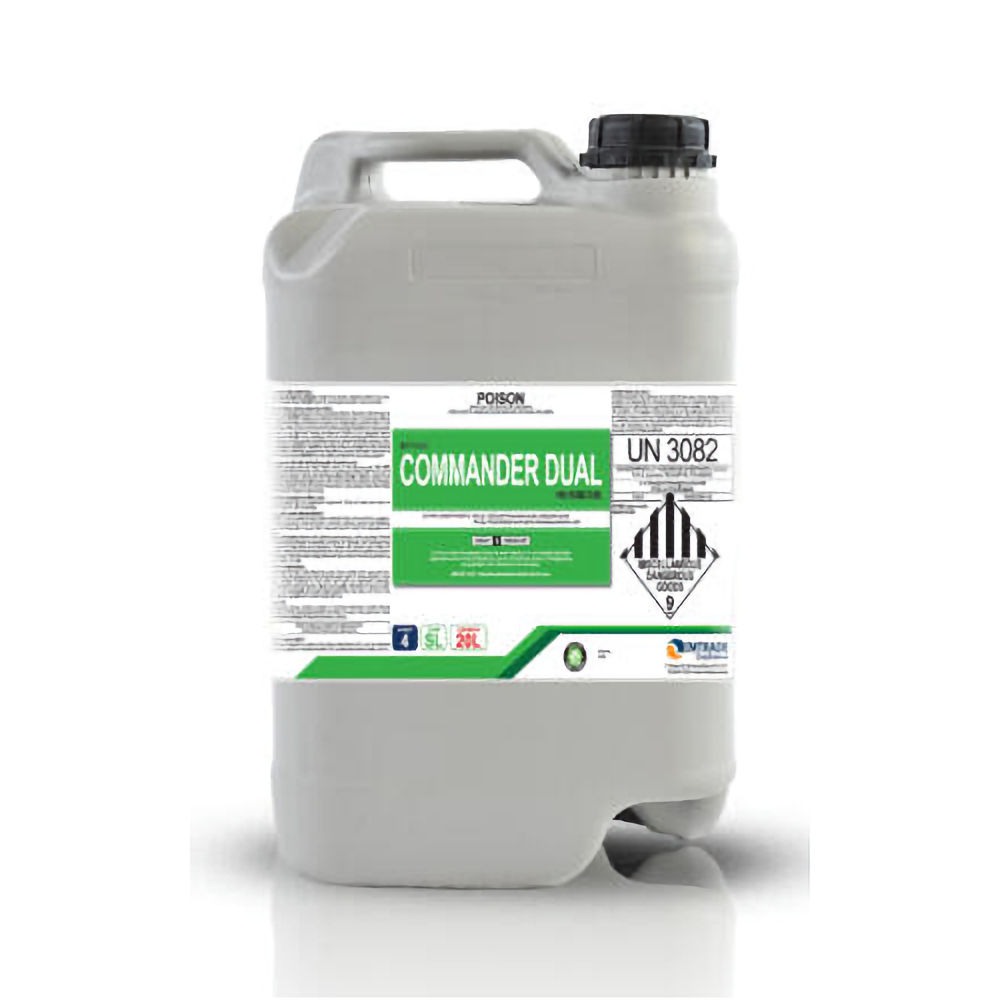
Commander Dual Herbicide
$430.00(GST Incl.) -

Flupropanate Granular Herbicide
Price range: $105.00 through $475.00(GST Incl.) -

Apparent MCPA 750 Selective Herbicide
Price range: $135.00 through $255.00(GST Incl.)
How herbicides are used in farming
Farmers in Australia use herbicides to ensure efficient, sustainable, and profitable operations. They’re essential for managing widespread weed problems in both intensive and broadacre farming systems.
Pre-emergent herbicides are often used before planting to provide early weed control, while selective post-emergent herbicides are applied to control specific weeds without damaging crops. Crop and herbicide rotation are standard practices used to reduce herbicide resistance risk.
Herbicides are also used in mixed farming operations that include livestock, or in livestock grazing-only operations.
Understanding the different types of herbicides
Herbicides are classified based on their mode of action, selectivity, residual nature in the soil, and application timing.
Some herbicides are selective, which means they target specific types of weeds whilst leaving crops unharmed. Others are non-selective and will kill most plant species they come into contact with. They can also be pre-emergent, applied before weeds germinate, or post-emergent, applied after weeds have sprouted.
The residual nature of a herbicide is also a key differentiator between products and active ingredients. Many herbicides have a residual effect in the soil, meaning they will remain active for an extended period after application to provide ongoing weed control. Unlike knockdown herbicides that kill existing weeds upon contact, residual herbicides work by forming a chemical barrier in the soil, targeting weed seeds as they germinate. Other herbicides do not offer any residual effects.
Herbicides may act through contact, affecting only the part of the plant they touch, or systemically, where they’re absorbed and move through the plant, effectively killing it from the inside.
What are the most common types of herbicides for farming?
While there are many different active ingredients found in herbicides, a few stand out as the most commonly used – and effective – solutions in farming settings. These include:
- Glyphosates: Found in common products like Roundup weedkiller, glyphosate is a non-selective herbicide that kills annual and perennial weeds. However, glyphosate can be used selectively in certain settings, like glyphosate-resistant crops.
- 2,4-D: 2,4-D is a selective herbicide that is particularly effective at controlling broadleaf weeds in crops and pastures.
- Metsulfuron methyl: This selective herbicide is another popular choice for eradicating broadleaf weeds, and works by impeding plant cell division.
- Dicamba: The active ingredient in products like Surefire, dicamba is used in agricultural settings to selectively address weeds (predominantly broadleaf weeds) in crops. It’s often paired with MCPA for better results.
- MCPA: MCPA (2-methyl-4-chlorophenoxyacetic acid) is another selective herbicide option, commonly used in conjunction with dicamba, to kill broadleaf weeds in crops and pastures.
Tips for using herbicides
When it comes to herbicides, responsible use is crucial. This includes following label directions and rotating herbicide modes of action. These strategies can help to mitigate resistance risk and protect environmental and soil health.
At Specialist Sales, you can explore herbicides to suit all your farming requirements. For advice on selecting the correct herbicide, check out the Specialist Sales blog or contact our team.