



Description
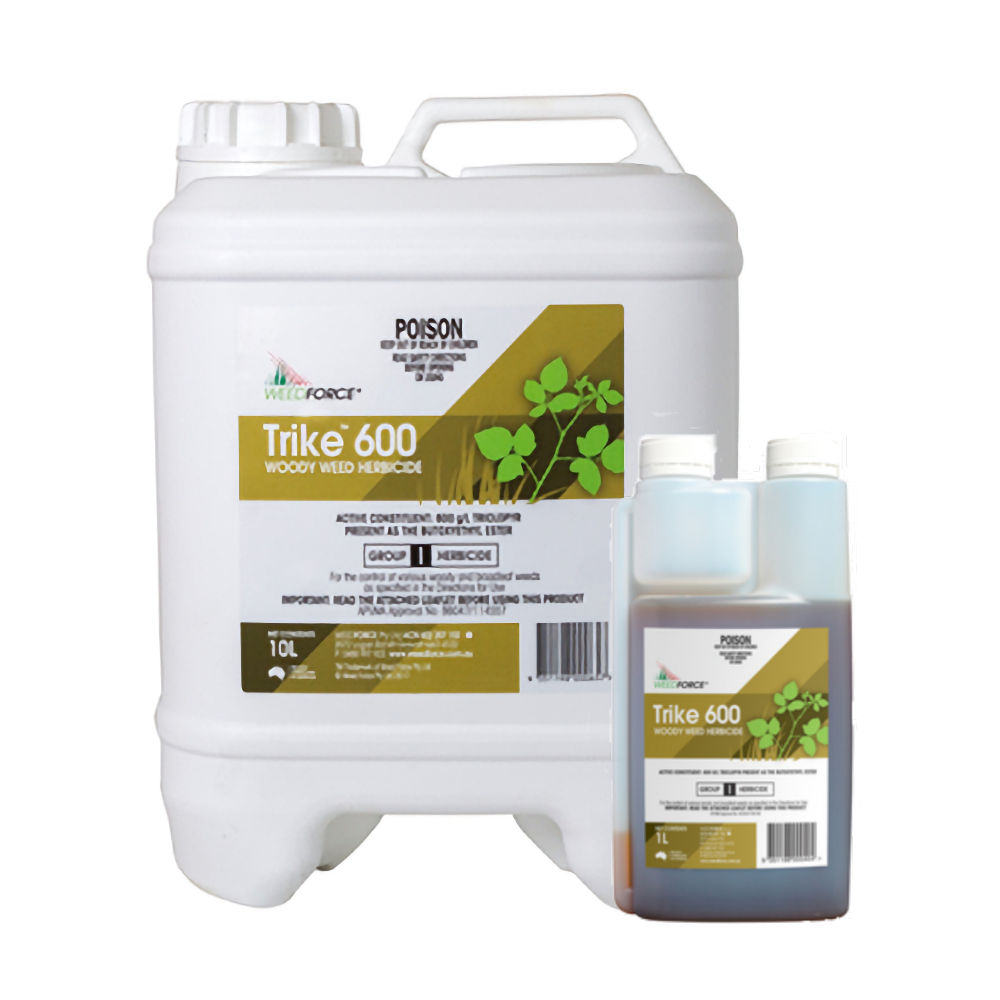
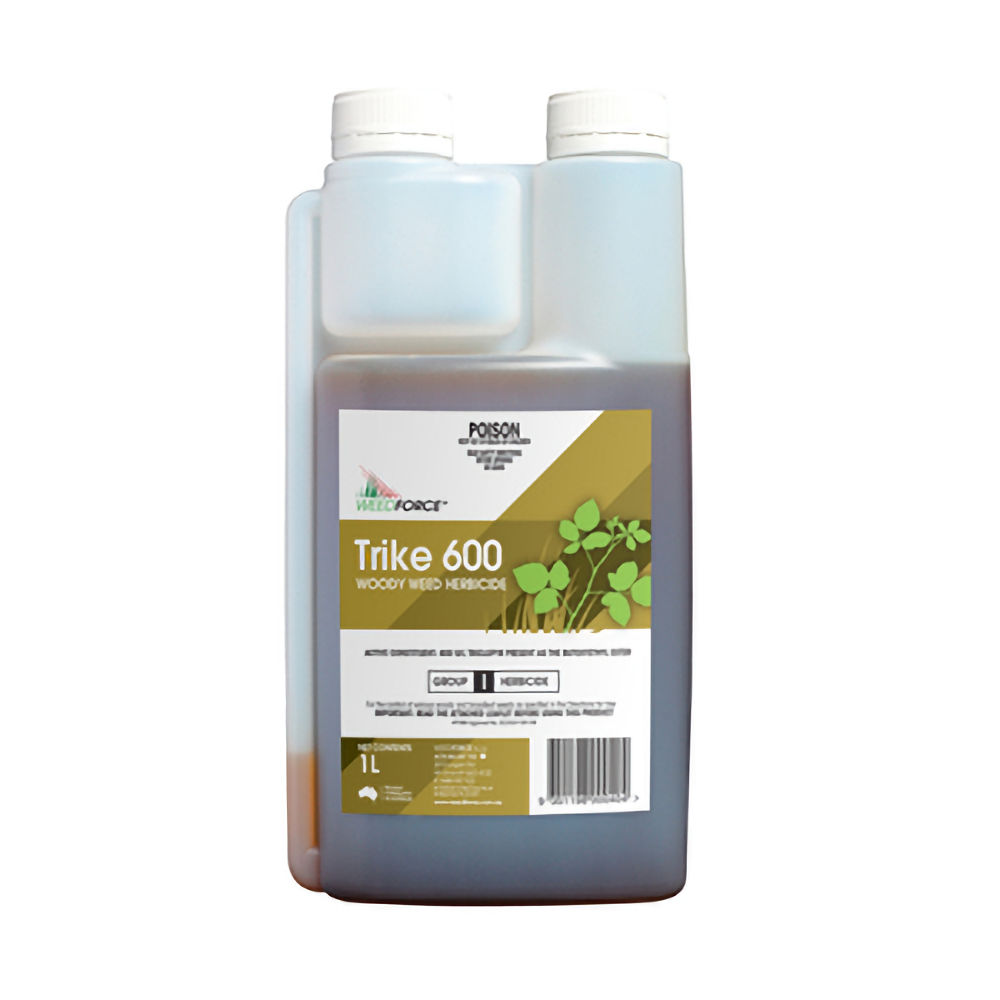
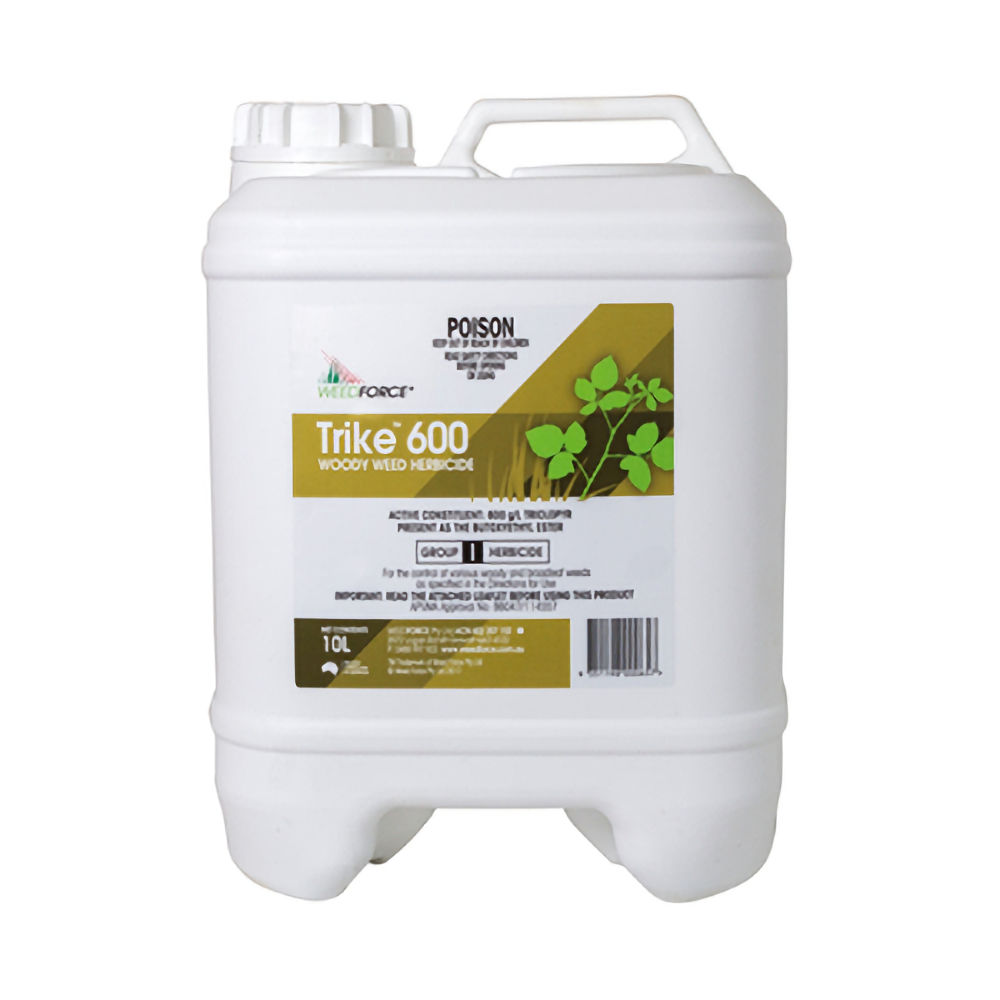
Weed Force Trike 600 Woody Weed Herbicide contains 600 g/L triclopyr, present as the butoxyethyl ester. As a Group 4 herbicide, it is registered for the control of noxious, environmental and herbaceous woody weeds in Australia. Because it belongs to the pyridines group, it works by disrupting plant cell growth, causing rapid brown-out of treated vegetation.
Produced by Weed Force Pty Ltd, Trike 600 targets more than 30 listed weed species across all states and territories. Seven registered application methods give producers the flexibility to tackle infestations of any scale. As a result, it suits both small landholders using a knapsack and large operations running high-volume handgun or aerial spraying programs.
Weed Species Controlled by Trike 600 Woody Weed Herbicide
State restrictions apply to all species listed below. Refer to the full label before use.
- Blackberry (Qld, NSW, Vic, SA, WA, Tas), Gorse (all states), Brigalow (Qld, NSW)
- Eucalyptus seedlings and regrowth from small lignotubers, Banksia, Angophora (all states)
- Silver Wattle, Black Wattle, Green Wattle, Groundsel Bush (all states)
- Seeding Camphor Laurel (up to 3 m tall), English Broom (all states), Brooms (Qld, NSW, Vic)
- Lantana, Rubbervine, Paperbark, Teatree, Needlewood, False Sandalwood, Tree of Heaven, Castor Oil (all states)
- Common Prickly Pear, Smooth Tree Pear, Tiger Pear (all states)
- Privet (all states), Prickly Acacia, Brown Salwood, Australian Blackthorn (all states)
- Green Cestrum (Qld, NSW, Vic), St John’s Wort (NSW, Vic, Tas)
- Sweet Briar, African Boxthorn, Bitter Bark (state restrictions apply), Camphor Laurel (Qld, NSW)
- Olive (NSW, SA), Dawson Gum, Yellow Wood (Qld)
- Paddy Melon (Cucumis myriocarpus), Afghan, Bitter or Camel Melon (Citrullus lanatus) — boom spray, fallow, stubble and firebreaks (NSW, SA, Vic, WA, Qld)
Application Methods
| Method | Species |
|---|---|
| High volume spraying (handgun) | Most listed woody weeds across all situations |
| Knapsack | Listed herbaceous and smaller woody weed species |
| Air blast (mistblower) | Eucalyptus, Blackberry, Brigalow |
| Aerial (helicopter or fixed wing) | Blackberry |
| Controlled Droplet Application (CDA) | Blackberry |
| Gas gun/sprinkler sprayer | Eucalyptus seedlings |
| Boom sprayer | Paddy Melon, Afghan, Bitter or Camel Melon |
| Basal bark and cut stump | 30+ species (see label for dilution rates in diesel) |
Frequently Asked Questions
What is the withholding period for Weed Force Trike 600 Woody Weed Herbicide?
No withholding period is required when the product is used as directed.
Can I use Trike 600 in a knapsack sprayer?
Yes, for the herbaceous weed species listed on the label. Established woody weeds require high-volume handgun sprayers for satisfactory control. The label restricts the mistblower to Eucalyptus, Blackberry and Brigalow, and aircraft to Blackberry only.
What is the mixing rate for blackberry control by high-volume spray?
Apply 170 mL per 100 L of water (25 mL per 15 L knapsack) from late spring to early autumn when bushes are actively growing. Best results occur between January and April.
Are pasture grasses harmed by Trike 600?
Grasses are normally unaffected by triclopyr and re-establish quickly after treatment. However, avoid spray drift onto cotton, tomatoes, vines, legumes and other susceptible crops.
Does Gorse control require a wetting agent?
The label specifies a non-ionic wetting agent at 125 mL per 100 L for Gorse control. For other species, a wetting agent is not mandatory, but it will improve coverage on waxy or hairy leaves.






What others are saying
There are no contributions yet.