


Why fleabane is getting harder to kill and what control method actually works
Table of Contents
Ask any farmer about fleabane and you’re almost guaranteed to hear the same story: they sprayed it, it looked dead, and then it re-emerged thicker than ever. Fleabane is often remarked upon by our customers as one of the hardest-to-kill weeds in Australian agriculture, not because it’s impossible to eradicate, but because established management practices are no longer working.
A big piece of this puzzle is resistance, which recent studies from Birchip Cropping Group have confirmed resistance is widespread across multiple states — especially when it comes to glyphosate. Weeds that were once resistant to other modes of action are also increasingly prevalent. Combined with fleabane’s prolific nature, easy wind dispersion, and cross-seasonal germination, you’ve got a recipe for disaster. Fleabane is a serious and continually growing threat to Australian agriculture across cropping systems and grazing land.
In this guide, we’ll cover why fleabane has become so difficult to control, how to identify which fleabane species you’re dealing with, and, most importantly, which programs are actually delivering reasonable results on-farm. If your current approach isn’t working, we’ve rounded up everything you need to know to get back on track.
What are the two most common fleabane species in Australia?
There are seven species of fleabane found around Australia, but just two cause the bulk of the damage to farming systems. Knowing how to identify the species you’re trying to control will help you make the correct product choice and time your herbicide application for best results.
If you’re dealing with fleabane, it’s highly likely it is either flaxleaf fleabane (Conyza bonariensis) or tall fleabane (Conyza sumatrensis).
Flaxleaf fleabane (Conyza bonariensis)
Flaxleaf fleabane is the more troublesome of the two species, and the one most commonly associated with herbicide resistance in Australia.
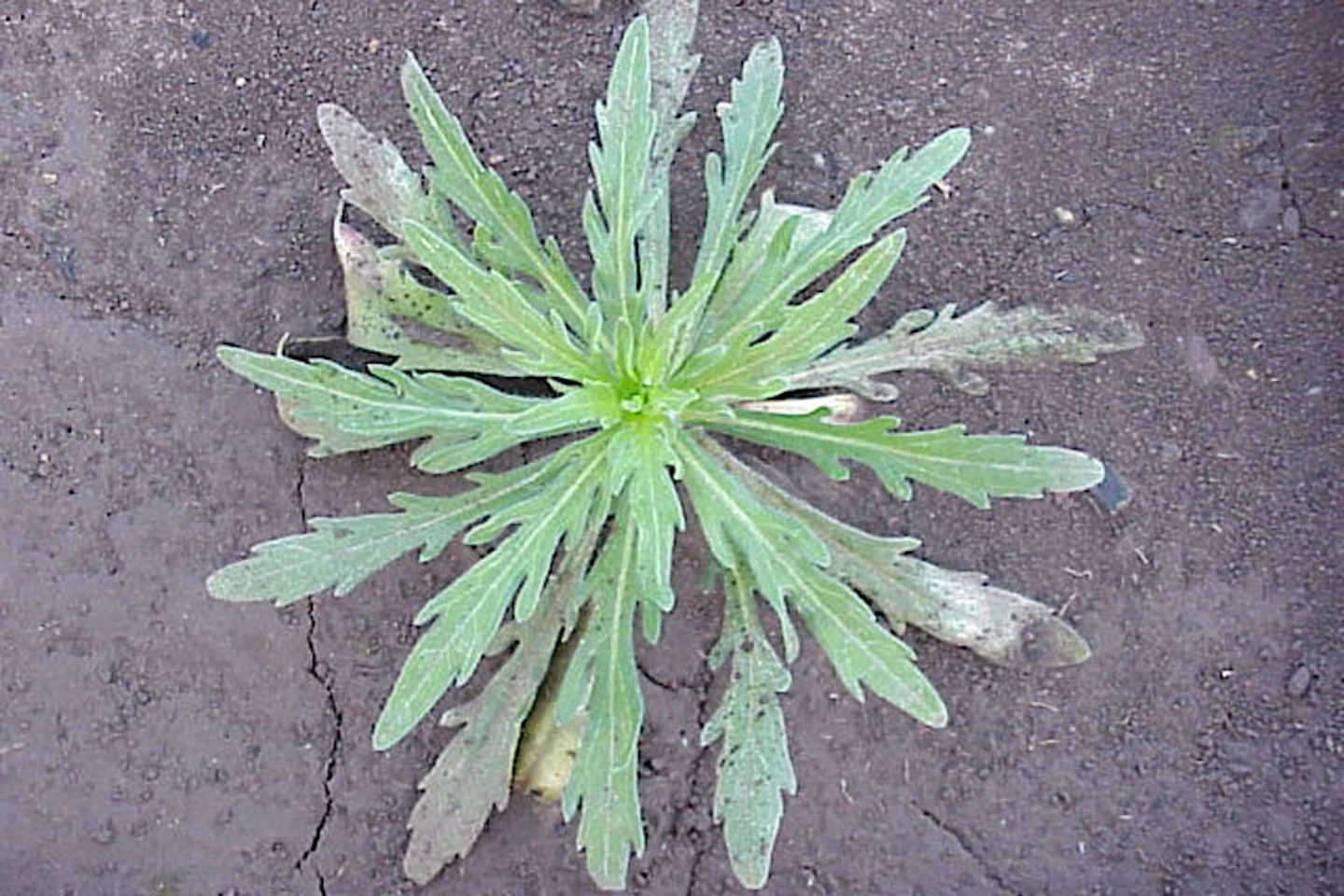
In its early stages, flaxleaf fleabane forms a low rosette with narrow, grey-green leaves that are wavy at the margins and covered in fine hairs. When left untreated, it bolts to an erect stem that can reach up to one metre in height. This coincides with the growth of small, daisy-like white flowers and seed that is often wind-dispersed in enormous quantities.
This weed thrives in disturbed soils and is particularly prevalent in no-till and minimum-till cropping systems, fallow paddocks, roadsides, irrigation channels, and overgrazed areas where ground cover has been reduced. If there is bare soil and a seed bank, flaxleaf fleabane is likely to find a way to germinate and thrive.
Tall fleabane (Conyza sumatrensis)
Compared to flaxleaf fleabane, tall fleabane is broader-leaved, tends to bolt to the stem faster, and can reach heights of 1.5 metres or more, hence the name. It is increasingly found in the same paddocks as flaxleaf fleabane, occasionally in mixed infestations.
Tall fleabane may carry a slightly lower resistance burden in some regions, but the difference is marginal and should not be relied on as a management strategy. For practical purposes, the control methods for both species largely overlap.
Both species of fleabane can produce up to 110,000 seeds per plant, and those seeds are wind-dispersed, meaning a single mature plant can recontaminate a large area and neighbouring properties. The germination window of these weeds is also long, running from late winter until early summer in most regions.
Why does identifying the right weed matter?
Understanding exactly which weed you’re dealing with is critical to building a functional control program, even though flaxleaf and tall fleabane have similar management approaches. Fleabane cannot be managed reactively, and a single spray event rarely captures all of its many seeds, so effective control relies upon biology, timing, and persistence.
Resistance: Why glyphosate alone isn’t working
Many land managers turn to glyphosate as a knockdown solution for fleabane, but the reality is, if it’s still your primary tool, you’re working against the odds in Australia. Glyphosate-resistant flaxleaf fleabane populations have been identified in Queensland, New South Wales, Victoria, and Western Australia, and the Grains Research and Development Corporation (GRDC) has flagged the species as one of the most significant resistance challenges in Aussie broadacre farming.
Resistance to Group 2 herbicides (ALS inhibitors) has also been recorded in some populations, so this issue is not solely limited to glyphosate. Some paddocks are now dealing with multi-mode resistance, or populations that have reduced susceptibility to more than one chemical class.
So, how exactly did this happen? Simply put, resistance develops through repetitive selection pressure. Every time a herbicide is applied to a weed population, only the most susceptible plants die. Meanwhile, the survivors reproduce — and with up to 110,000 seeds per plant plus wind dispersal, even a small percentage has the potential to build a resistant local population.
In no-till and minimum-till farming systems, where the same herbicide formulations have often been applied cross-paddock for five, 10, or more years, selection pressure has become intense. The result is populations that are far more resistant to the same application rates that would’ve offered excellent control a decade earlier.
For producers, the best approach is to treat resistance as a working assumption, not an exception. Even in paddocks where resistance isn’t yet confirmed, it’s prudent to build a management strategy as if it’s there. The cost of assuming weeds will be susceptible to a specific herbicide is much more significant than the easy alternative.
Which herbicides work for fleabane control?
Your choice of fleabane herbicide will depend on your farming system and land use situation. The options available in a cropping fallow differ from those in growing crop, pasture, or non-cropland situations.
Across all environments, though, two principles remain the same: fleabane must be targeted at the rosette stage for reliable herbicide performance, and a quality surfactant, crop oil, or penetrant should be included in the tank mix to permit uptake.
Broadacre cropping (fallow)
Fallow is the most critical weed control window for cropping situations. When dealing with small rosettes, a tank mix that combines a Group 4 herbicide such as 2,4-D amine with glyphosate and a quality adjuvant is the most common starting point. Because glyphosate resistance is prevalent in many paddocks, it should never be relied on as your sole herbicide. The GRDC recommends mixing it with a second mode of action for successful control.
Residual herbicides applied alongside a knockdown spray will extend the clean period by suppressing germinating seeds. Products containing flumioxazin (Group 14) or isoxaflutole (Group 27) are regularly used for this purpose in fallow situations. Residual efficacy relies on adequate soil moisture for activation, so always time application around expected rainfall to improve results. It’s also critical to check plant-back periods for the following crop before deciding on a residual herbicide.
Group 10 herbicides, such as those formulated with glufosinate, offer a useful alternative mode of action in fallow, particularly where resistance to Group 9 or Group 4 chemistry has been observed. Because these herbicides are contact-based, excellent spray coverage is critical. Group 10 weed killers perform best in warm conditions with temperatures over 15°C.
The double-knock strategy
When plants are larger than the ideal rosette stage, or where resistance is suspected, a ‘double-knock’ program significantly improves results. This strategy involves applying an initial knockdown spray, followed by a second herbicide with a different mode of action 7 to 14 days later.
WeedSmart trials conducted in 2024 in Western Australia found that registered double-knock combinations resulted in over 95% control of mature flaxleaf fleabane weeds and significantly reduced seed viability, even on plants with flowers that were already opening. The double-knock strategy is also one of the most effective resistance management tools available, as it reduces the chance of surviving plants producing viable seeds.
Broadacre cropping for in-crop options
There are more registered in-crop herbicide options for fleabane in winter cereals than many farmers realise, spanning Groups 2, 4, 14, 27, and others. Most options are effective on small fleabane (cotyledon to 6-leaf stages), though several require mixing with a crop oil or surfactant for best results. Post-emergent options are more limited in broadleaf crops like chickpeas and faba beans (broad beans or fava beans), so applying pre-emergent residual herbicides at planting is a much more reliable approach here.
For a current list of registered herbicides for in-crop contexts organised by crop type, rates, and growth stage, refer to the GRDC’s Integrated Weed Management of Flaxleaf Fleabane manual or contact your agronomist. Product registrations and use patterns vary by Australian state, so always confirm that a product is registered for your circumstances before use.
Pastures, non-cropland, and rights of way
For grazing enterprises, roadsides, and non-cropland areas, the registered herbicide options are more limited — but luckily, still practical. Key Group 4 options like 2,4-D amine and picloram/triclopyr combinations are effective when applied to small, actively growing rosettes with thorough coverage. Some products require an APVMA permit for use on fleabane in these contexts, so confirm requirements and withholding periods carefully before you spray.
Glufosinate-based Group 10 herbicides are also registered for use in commercial, industrial, and rights-of-way situations, and offer a useful mode of action for rotation. As with all fleabane control, timing application to the rosette stage and including a quality wetting agent in your mix will ensure reliable results.
Why use a penetrant or wetting agent?
It’s critical to use a penetrant or wetting agent when controlling fleabane due to its naturally waxy, densely hairy leaf surface. Without an additional tool to increase uptake, herbicide spray droplets will bead and run off the plant’s surface, rather than spreading and penetrating the tissue.
Fleabane’s physical barrier can significantly reduce herbicide efficacy, even in situations where resistance is not present — hence why a quality non-ionic surfactant, crop oil, or penetrant is specified on the label of most fleabane-registered herbicides.
What to avoid when using herbicides to kill fleabane
There are a handful of common but avoidable mistakes that people make when administering fleabane control programs. They include:
- Spraying bolted plants with products intended for rosettes: Once a fleabane plant has bolted, your options narrow considerably, and the outcome will be disappointing regardless of application rate.
- Using glyphosate alone: Without resistance testing or rotating herbicides with different modes of action, glyphosate becomes a high-risk chemical choice, especially in paddocks with a history of repeated glyphosate use.
- Poor water volume or incorrect nozzle selection: Fleabane’s hairy surface demands good coverage, which in turn necessitates high water volume and even spraying. Low water volumes and coarse droplets that miss the leaf surface are a recipe for ineffective control.
- Unsuitable weather conditions: Spraying during hot, dry, or windy conditions will reduce herbicide uptake, accelerate product breakdown, and increase off-target drift risk. Spray early in the day during cooler conditions whenever possible.
How to slow chemical resistance and manage fleabane spread
Even if resistance is not yet confirmed on your property, building resistance management into your program early is easier and cheaper than dealing with a resistant population once established. Here’s how to incorporate effective tactics into your fleabane control strategy:
- Prevent seed set: This is the single most important principle in fleabane resistance management. Just one escaped plant with the potential to produce 110,000 seeds can set a control program back by years. If a plant is too advanced to control chemically before it sets seed, physically remove and destroy it. This isn’t a wasted effort — it’s a protection mechanism for the future of your program.
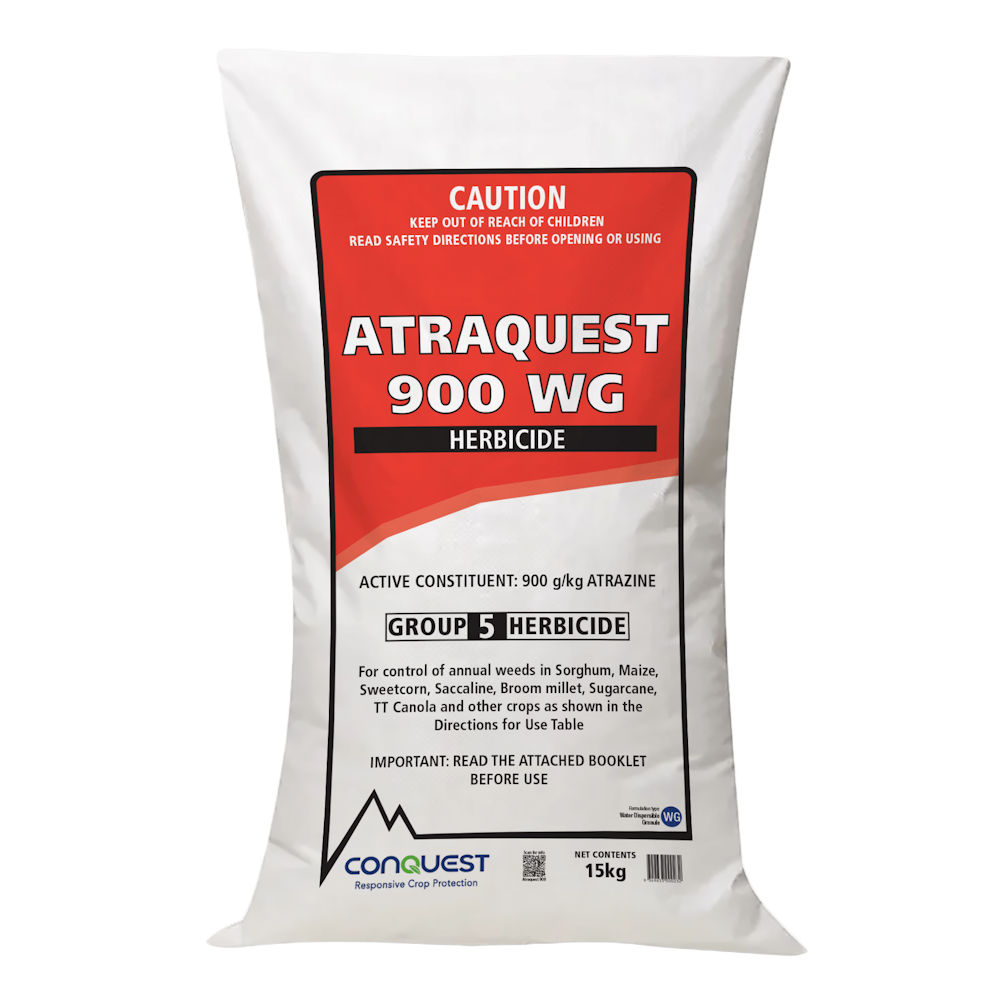
- Rotate modes of action: Never rely on a single herbicide group for more than one consecutive season. Alternating between Group 9 (glyphosate), Group 6 (paraquat), Group 4 (2,4-D, dicamba), and Group 5 (atrazine), where registered and appropriate, will reduce selection pressure on any one mode of action and slow the development of resistant populations in your local seed bank.
- Use crop competition as a management tool in cropping systems: Dense, competitive crops at adequate seeding rates reduce light penetration to the soil surface, suppress fleabane germination, and reduce reliance on herbicide intervention. While this is not a standalone strategy, it can meaningfully reduce pressure on chemicals as part of an integrated program.
- Maintain pasture cover in grazing systems: This is the most effective and low-cost suppression tool in grazing contexts. A dense, competitive pasture leaves very little bare soil where fleabane can establish and thrive. Overgrazing isn’t just a productivity problem; it’s a weed problem.
- Keep stringent records: As you attempt fleabane control, note which products were applied, at what rates, in what conditions, and with what results. Patterns of reduced efficacy, plants taking longer to die, and a higher-than-expected survival rate are some of the initial signs of resistance development in paddocks. Catching this early means you can adjust before domination occurs.
Why timing matters with herbicide application
Even the right herbicide with the correct mix will underperform if applied at the wrong time. This is one of the most consistent causes of fleabane control failure — not a bad product, but a good product applied too late.
As we know, fleabane is most susceptible to herbicides as a rosette, ideally under 5cm in diameter. Before stem bolting begins, the plant has relatively thin tissue, high metabolic activity, and limited capacity to exclude or metabolise incoming herbicide. Once the plant has bolted and moved into the erect stem stage, the efficacy of most knockdown herbicides will drop significantly. At that point, some products are simply ineffective regardless of the rate or mix used.
In addition to the plant’s growth stage, consider germination timings in your region. In Queensland and northern New South Wales, germination can begin as early as late summer. In southern regions, the main flush typically happens in autumn, with a secondary event in early spring. Single spray events are rarely sufficient across the full germination window, and programs that include a pre-emergent residual application followed by a knockdown treatment (timed to the weed’s first germination) are far more likely to perform.
In cropping systems, the fallow and pre-planting windows are the most critical intervention points. Addressing small rosettes during fallow before they bolt, seed, or crops establish is how your control program will flourish.
Lastly, in grazing systems, fleabane most commonly establishes after overgrazing reduces pasture cover and exposes bare ground. To improve herbicide outcomes, time control to follow stock removal, rather than spraying into a continuously grazed paddock. Restoring pasture cover after treatment is equally as important, as bare ground is an open invitation for fleabane reinfestation.
How to stop fleabane from coming back
Effective fleabane management is not achieved from a single spray event. The farmers enjoying consistently good control are the ones who view fleabane management as a year-round program, and every season as an opportunity to enhance their strategies.
Here’s what that looks like in practice:
- Autumn and winter: In the cooler seasons, monitor paddocks closely during peak germination windows. Apply a knockdown and residual mix to rosettes while they are small. Prioritise fallow paddocks, any areas with a known resistance history, and paddocks emerging from a seed-set season. This is your most critical intervention period.
- Spring: Follow up on any surviving plants from the autumn application. Apply pre-planting treatments ahead of summer crops in northern regions, again targeting small rosettes. Scout paddocks regularly for bolting plants and act before seed heads develop by either removing manually or applying herbicide.
- Summer and post-harvest: Look for late-season germination, particularly in paddocks that have been harvested and left with open soil. Address any bolted escapes before seed set, physically if necessary. In grazing systems, manage stock pressure to maintain pasture cover throughout the summer.
- Year-round: Maintain pasture cover in grazing systems, and rotate herbicide modes of action with each season. Maintain good records, and keep a close eye on paddocks with a known resistance history. Treat any reduction in herbicide efficacy as an early warning to adjust your program.
Fleabane isn’t going away, and preventing seed set is the single most important step. A plant that never sets seed cannot contribute to next season’s problems.
Beyond that, integrating chemical control with good pasture or crop management, maintaining ground cover, and rotating modes of action from season to season will yield the best long-term control. Committing to timing and rotation and building a strategy that considers the plant’s biology are also key contributors to successful fleabane management.
If you need help selecting the right herbicide mix or penetrant to control fleabane on your land, Specialist Sales’ team of experts is here to advise. With over 20 years of experience supporting Australian farmers and land managers, we’ll work with you to develop a program that benefits your system and region.
About the author