


How to identify, treat, and stop blowfly strike in sheep
Table of Contents

Ask any sheep producer what worries them most during warm or wet weather and flystrike risk will be at the top of their list. Caused by blowflies laying eggs on damp or soiled wool, this condition spreads quickly, is brutal on the animal, and can lead to severe consequences if missed as part of routine paddock checks.
Critically, the Australian sheep industry loses an estimated $173 million every year to blowfly strike due to deaths, lost production, and treatment costs, according to Australian Wool Innovation (AWI).
This being said, blowfly strike (AKA strike or flystrike) is entirely manageable once you understand blowfly behaviour, know the early signs of infection, and have a solid prevention program in place. Producers who take these precautions rarely lose sheep to the condition and can quickly mitigate the effects of strike on their mob if infection occurs.
Keep reading for our comprehensive guide to managing flystrike, from the biology of the blowfly to the treatment products that actually work.
The main blowfly strike culprit: Lucilia cuprina
Blowfly strike occurs when blowflies lay their eggs on a sheep’s warm, moist, or odorous fleece. Within 24 to 48 hours, producers can have serious effects on their hands as a life-threatening maggot infestation develops and begins to eat at the sheep’s live tissue.
The blowfly species responsible for the vast majority of Australian flystrike cases is Lucilia cuprina, or the Australian sheep blowfly. The AWI FlyBoss program reports that L. cuprina is active across most of the country’s sheep-producing regions from late winter through to autumn, with spring and early summer representing the highest-risk window. Warm, humid conditions accelerate both L. cuprina activity and the rate at which eggs can develop into larvae. In some northern parts of Australia, the fly stays active year-round.
While L. cuprina is the biggest culprit, secondary species like Calliphora spp. (blue bottles or bottle flies) and Chrysomya spp. (Old World blowflies) can also contribute to blowfly strike, particularly around wounds. Ultimately, though, L. cuprina is the species producers must focus on controlling.
Why sheep are so vulnerable to blowfly strike
Sheep, especially those with heavy, wrinkled fleeces, give blowflies a lot to work with. Potential risk factors that commonly occur include:
- Soiled wool (dag) around the breech
- Wet fleece after rain
- General dag build-up
- Wounds from shearing
- Footrot
- Lice infestations
- Fleece rot
- Scouring caused by lush pasture or worm burdens
- Body strike during wet seasons
- Pizzle strike in Merino wethers
Many of these conditions are extremely prevalent amongst sheep during wet and warm seasons in Australia, hiking up the risk of blowfly strike infection considerably.
What blowfly strike looks like
When it comes to dealing with blowfly strike, quick action matters, and that starts with the prompt identification of infestations. The faster you’re able to recognise and isolate affected sheep, the better your outcomes will be.
Watch for these signs of flystrike in sheep:
- Behavioural changes: A struck sheep will often bite or kick at the affected area, stand away on its own, or appear generally agitated and unsettled. Foot-stomping or rubbing against fences is also common.
- Fleece discolouration: The wool over a blowfly strike site will turn yellowish, brownish, or dark, and tends to look wet or matted.
- Distinct odour: The smell of flystrike is sharp and ammonia-like. It’s often the first thing producers notice when inspecting sheep for infection.
- Visible maggots: In more advanced cases, maggots may be visible when you part the wool. The skin beneath will be raw and moist, and may show significant tissue damage. Note that maggots penetrate tissue quickly, and the toxins they release can have systemic effects on the animal within a matter of days, so it’s crucial to keep a close eye.
In cooler or overcast weather, flystrike can be less obvious because fly activity slows down. This is precisely why routine, systematic flock inspections are mandatory, regardless of the time of year.
How to treat blowfly strike
As soon as you notice signs of flystrike in your mob, you must act immediately. Follow these steps for thorough inspection and to begin the blowfly strike treatment process:
- Clear the area: Begin by separating the affected animal/s from the flock and examining them. Using crutching shears or hand shears, clip away all the wool from the flystrike site and well beyond the visible damage. A minimum of 5 to 10 centimetres of clear space is recommended around the wound edge in all directions. This step is non-negotiable, as leaving wool adjacent to the wound site will trap moisture, obscure the true extent of the damage, and provide surviving maggots with a place to retreat.
- Remove maggots: Once the affected area is cleared, use a gloved hand or blunt instrument to physically remove as many maggots as possible before applying any chemical treatment.
- Wound treatment: With the wound exposed and maggots removed, apply a registered wound treatment product directly to the affected tissue to kill any remaining maggots on contact. This will also disinfect the wound to prevent secondary bacterial infection, and help deter reinfestation by any blowflies attracted to the open tissue. Apply generously to the wound cavity and across the surrounding skin. For sheep with larger or deeper strike wounds, a jetting fluid can be applied via a jetting wand to treat the site and saturate the surrounding shorn area, providing broader coverage.
- Mark the sheep: Make a clear marking on the sheep with a wool marker so it can be monitored closely in the following days.
- Move animals: Relocate the affected animals to a clean, dry, and sheltered paddock where they can be checked on easily. Inspect the wound site daily to confirm maggot activity has ceased and that healing is progressing. If the wound shows signs of deepening infection, persistent maggot activity after 48 hours, or foul odour, or if the sheep appears systemically unwell, off feed, lethargic, or in pain, contact your veterinarian immediately.
- Conduct follow-up treatments: Deep or extensive flystrike can cause tissue damage and toxin absorption serious enough to be fatal, even after surface treatment. Some animals will require antibiotic support or additional veterinarian intervention to recover fully. With attentive follow-up care and prompt initial treatment, the majority of struck sheep can recover well, but the speed of your response will ultimately determine the outcome.
The best products for treating blowfly strike
When you find active blowfly strike in your mob, the immediate priority is to treat the affected animal using the steps we’ve outlined above. Here at Specialist Sales, we recommend a variety of different products for blowfly strike treatment.
Extinosad Aerosol (spinosad and chlorhexidine) is specifically formulated for wound treatment in sheep affected by flystrike. Its dual-action formula combines spinosad, a naturally derived insecticide, with chlorhexidine to kill maggots on contact, disinfect the wound, and prevent reinfestation. It is easy to apply directly into wound cavities and offers a practical choice for on-the-spot treatment during musters or paddock checks.
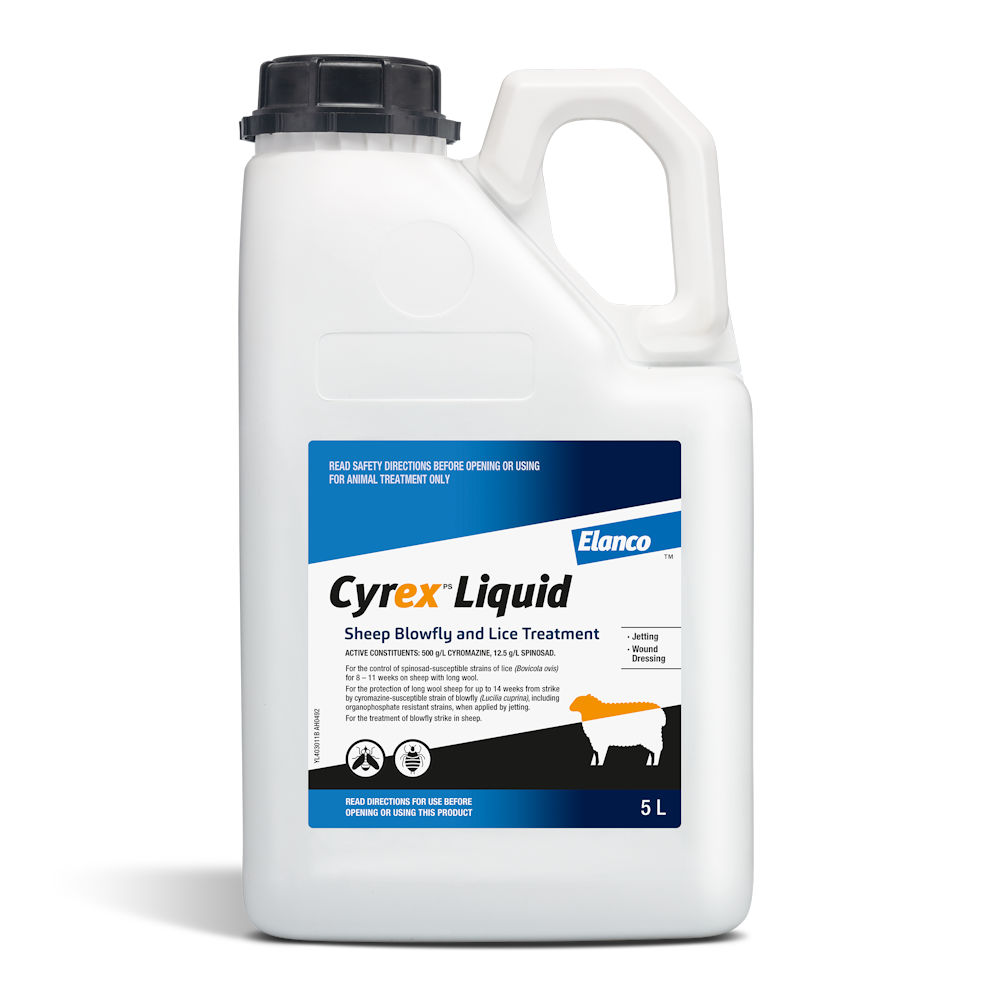
For broader treatment of struck animals via jetting or spray application, Coopers Blowfly and Lice Jetting Fluid or CyrexPS Liquid Sheep Blowfly and Lice Treatment both offer proven ways to kill maggots and lice simultaneously. Applied through a jetting wand, these products deliver the chemical directly to the wound site and the surrounding fleece, providing short-term protection while the animal recovers.
Severely affected animals showing signs of systemic illness, significant tissue loss, or loss of appetite, should receive urgent veterinary attention. In some cases, supportive care via fluid therapy and antibiotics may be warranted.
Chemical timing and preventative treatments for blowfly strike
If your prevention program is working well, active strike should be the exception, not the rule. The aim is to apply protective treatments before fly populations peak and conditions on individual animals become attractive for egg-laying.
We offer a broad range of preventative treatments for blowfly strike across different active ingredient classes and protection durations, allowing producers to match their chosen products to their management calendar.
Effective products include:
- CLiK Spray-On: The active ingredient dicyclanil is an insect growth regulator (IGR) that prevents blowfly eggs from hatching and larvae from developing. CLiK Spray-On delivers 18 to 24 weeks of protection for every application, making it well-suited to treatment pre-shearing or ahead of the spring fly season. It is particularly valuable for sheep that will not be mustered again for an extended period.
- CLiK Extra Spray-On: The extra-strength version of CLiK Spray-On extends this performance further still, providing up to 24 weeks of protection. It is registered for use across body, breach, and pizzle strike prevention.
- Neovek Extra Spray-On: Also formulated with dicyclanil, Neovek Extra is another long-acting spray-on option that offers up to 24 weeks of protection. It works well for operations that run large flocks on a single-treatment program.
- Extinosad Lice, Fly and Maggot Eliminator: The active ingredient in this product, spinosad, operates via a different mode of action to most insect growth regulators, instead disrupting the insect’s nervous system through contact and ingestion. Extinosad provides an important resistance management option for operations where IGR resistance may be a concern. Its relatively low mammalian toxicity profile makes it suitable for producers seeking a more sustainable rotation.
- Avenge + Fly Spray-On and Pour-On: This combination product targets both blowflies and lice, making it a practical option for producers who want to address multiple external parasite challenges with a single treatment. Available in a 20-litre drum, it suits larger operations where handling sheep twice — once for lice and once for flies — represents a significant labour cost.
- CyrexPS Liquid Sheep Blowfly and Lice Treatment: CyrexPS uses a synthetic pyrethroid active to deliver both blowfly and lice control in the one product. Available in a 5-litre pack size, it’s more suitable for smaller flocks or as a targeted paddock option during high-risk periods.
- Spartan SC and Spartan Spray-On: The Spartan range provides a cost-effective, spray-on blowfly protection option for Australian producers. It’s available in both 5-litre and 20-litre packs, making it suitable for flocks of varying scales.
- Akula Concentrate for Lice, Fly and Worms: Akula is a multi-purpose oral and pour-on concentrate that addresses internal parasites and external pests, including blowfly, in the one treatment. It suits producers who want to minimise the number of separate handling events across their parasite management calendar.
Managing blowfly strike resistance
Chemical resistance amongst L. cuprina is a real, growing concern for sheep producers in Australia. Research published by the AWI has identified that L. cuprina populations in some regions have developed reduced susceptibility to organophosphate products, and there are increasing concerns around some IGR classes in heavily treated regions.
For producers, the takeaway is practical and straightforward: rotating between chemical classes reduces the selection pressure on any single mode of action and will slow resistance development amongst your local fly population. In action, this could look like alternating dicyclanil-based products with spinosad between seasons or treatment events. We suggest consulting the AWI FlyBos resistance management guidelines when you are developing your treatment program.
Integrated management programs for treating blowfly strike
Chemical prevention is always going to do the heavy lifting when attempting to control flystrike, but this works best as part of a broader approach. We recommend combining chemical treatments with the following integrated management practices:
- Crutching: Regular removal of wool from the breech and around the tail cuts down on dag build-up and removes the moist, soiled environment that flies need to lay eggs. A strategic pre-fly-season crutch is one of the most effective (and cost-effective!) tools in your kit.
- Worm control: Scouring from internal parasite burdens is one of the key drivers of breech flystrike. A well-timed drench ahead of peak fly season will reduce dag formation and lower the strike risk considerably.
- Selective breeding: Over the long term, selecting for sheep with less wrinkled skin, plain breeches, and lower dag scores can steadily reduce flock-wide susceptibility to blowfly strike.
- Monitoring: During peak fly season, inspect your mobs every 3 to 4 days at minimum. High-risk animals — like those carrying heavy dags, fleece rot, or lice infestations — should be checked even more frequently.
Though blowfly strike can be a grim discovery with the potential to significantly disrupt your operations, with the correct management and prevention techniques in place, it’s possible to address — especially if you move quickly. For producers, it pays to have the correct flystrike treatments on hand in case speedy treatment is required.
Shop a wide range of sheep health products here at Specialist Sales, including blowfly control methods that utilise proven active ingredients. If you need support finding the right product to suit your circumstances, we’re here to help — get in touch with us for expert advice.
About the author