



Description
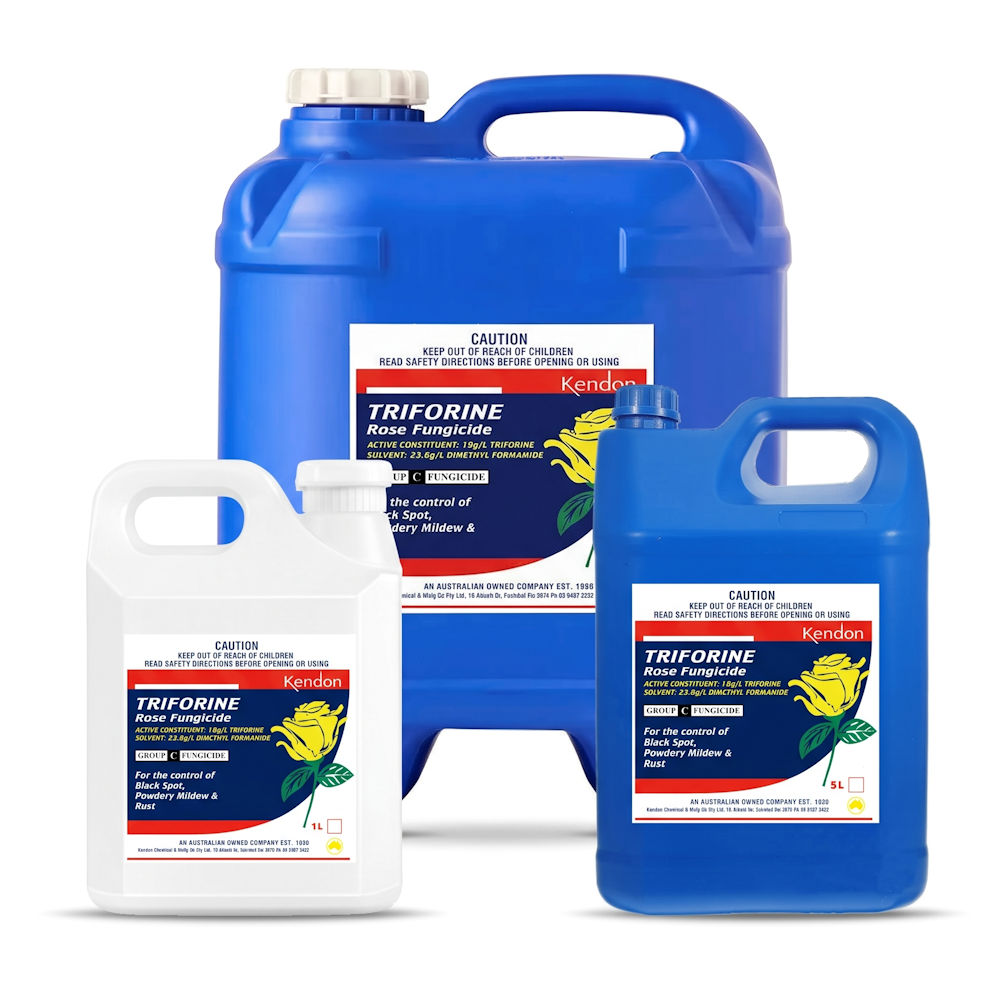
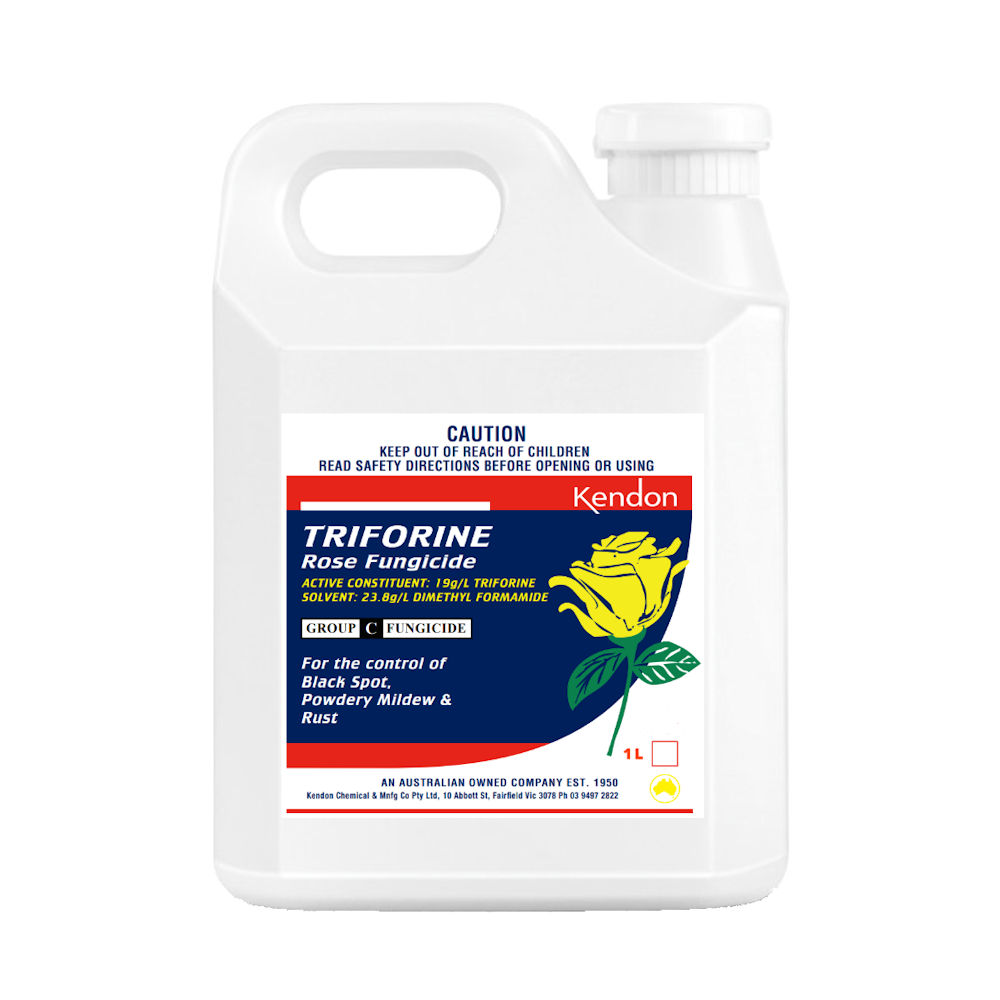
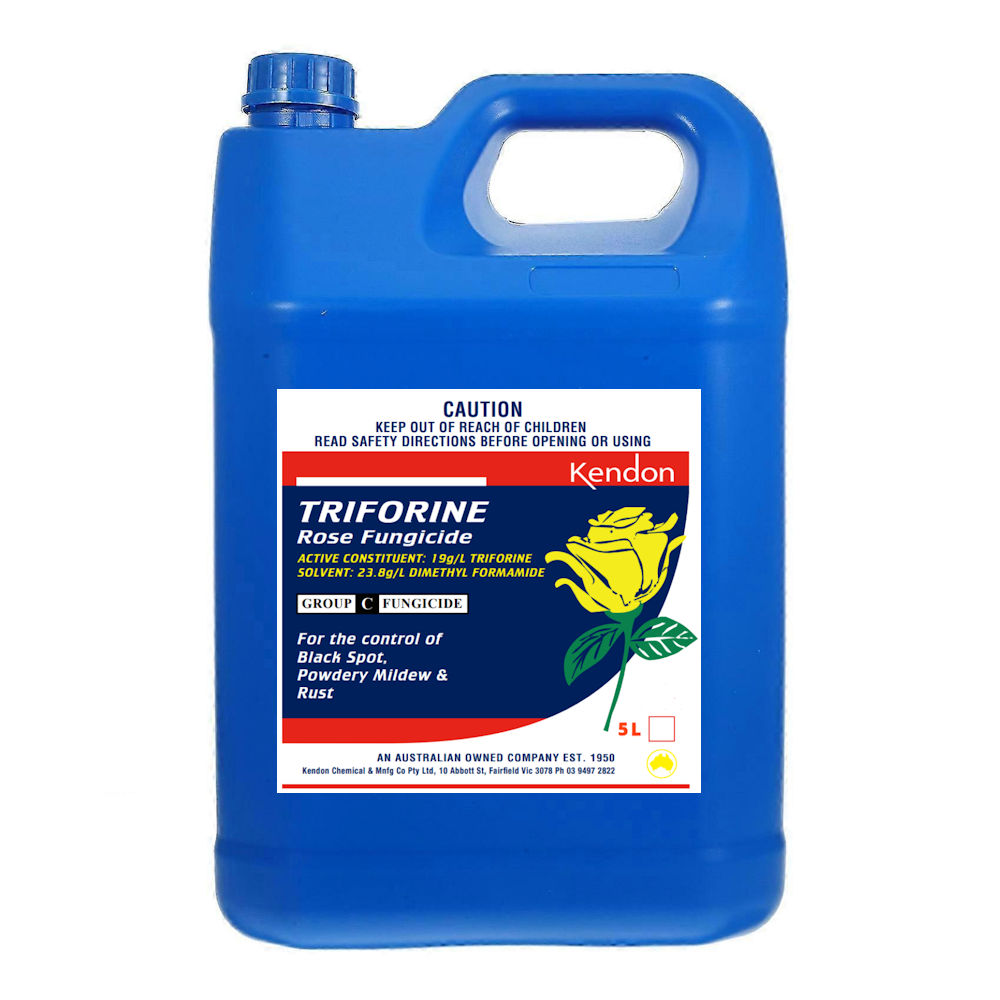
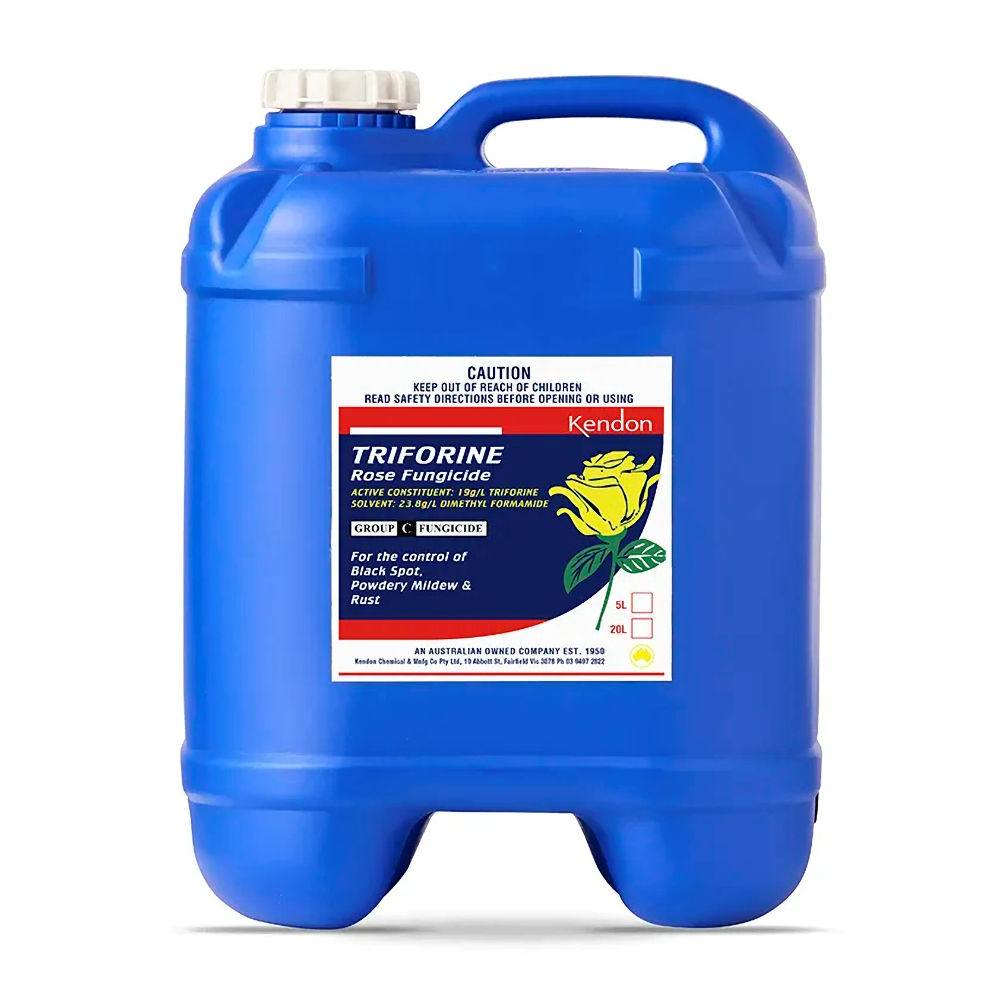
Kendon Triforine Rose Fungicide controls black spot, powdery mildew and rust on roses. It contains 19 g/L triforine, a Group C DMI fungicide. Kendon Chemical & Mnfg Co Pty Ltd manufactures this Australian rose fungicide, and gardeners rely on it to protect foliage and blooms right through the disease season. Because the three main rose diseases spread fast in warm, humid weather, a systemic spray gives growers a practical way to stay ahead of them.
Triforine works from inside the plant. The leaves absorb the active, and it then moves upward through the xylem into new growth. As a result, fresh shoots gain protection that a surface-only spray cannot match. Moreover, triforine offers protective, curative and eradicant activity. Therefore, it both prevents new infection and checks disease that has already taken hold.
Why choose Triforine Rose Fungicide for black spot and mildew
Black spot, powdery mildew and rust weaken roses, spot the leaves and cause early leaf drop. Consequently, untreated plants flower poorly and lose vigour. This fungicide targets all three diseases with a single active. Growers simply mix 15 mL per litre of water and spray to the point of run-off. In addition, they repeat every 7 to 10 days while disease pressure stays active. Kendon also builds the product on a low-odour liquid base, so it mixes easily and suits home gardens, nurseries and commercial rose growers alike.
Frequently asked questions
Q. What does Kendon Triforine Rose Fungicide control?
A. It controls black spot, powdery mildew and rust. These are the three main fungal diseases of roses. It is registered for roses of all types.
Q. How do I mix and apply it?
A. Mix 15 mL of product per litre of water. Then spray the plants to the point of run-off. Cover both leaf surfaces thoroughly for best results.
Q. How often should I spray?
A. Apply at intervals of 7 to 10 days. Continue for as long as the diseases stay active. Regular sprays keep new growth protected.
Q. Is triforine systemic?
A. Yes. The plant absorbs triforine through the leaves. It then moves through the xylem into new growth, which gives protection from within.
Q. Can I tank mix it with an insecticide?
A. Yes, in some cases. The label allows mixing with either Carbaryl or Pirimor. However, do not combine it with both or with other products, because serious plant damage may result.
Q. Is Kendon Triforine Rose Fungicide the same as Saprol Fungicide?
A. Both products use triforine, and both sit in fungicide Group C. Both control black spot, powdery mildew and rust on roses. However, two differences matter. Kendon Triforine contains 19 g/L triforine and is registered for roses only. Saprol, from Sipcam Pacific Australia Pty Ltd, contains 190 g/L triforine and also covers certain fruit trees and other ornamentals. The mixing rates therefore differ. Always compare both labels before you substitute one for the other.


What others are saying
There are no contributions yet.