



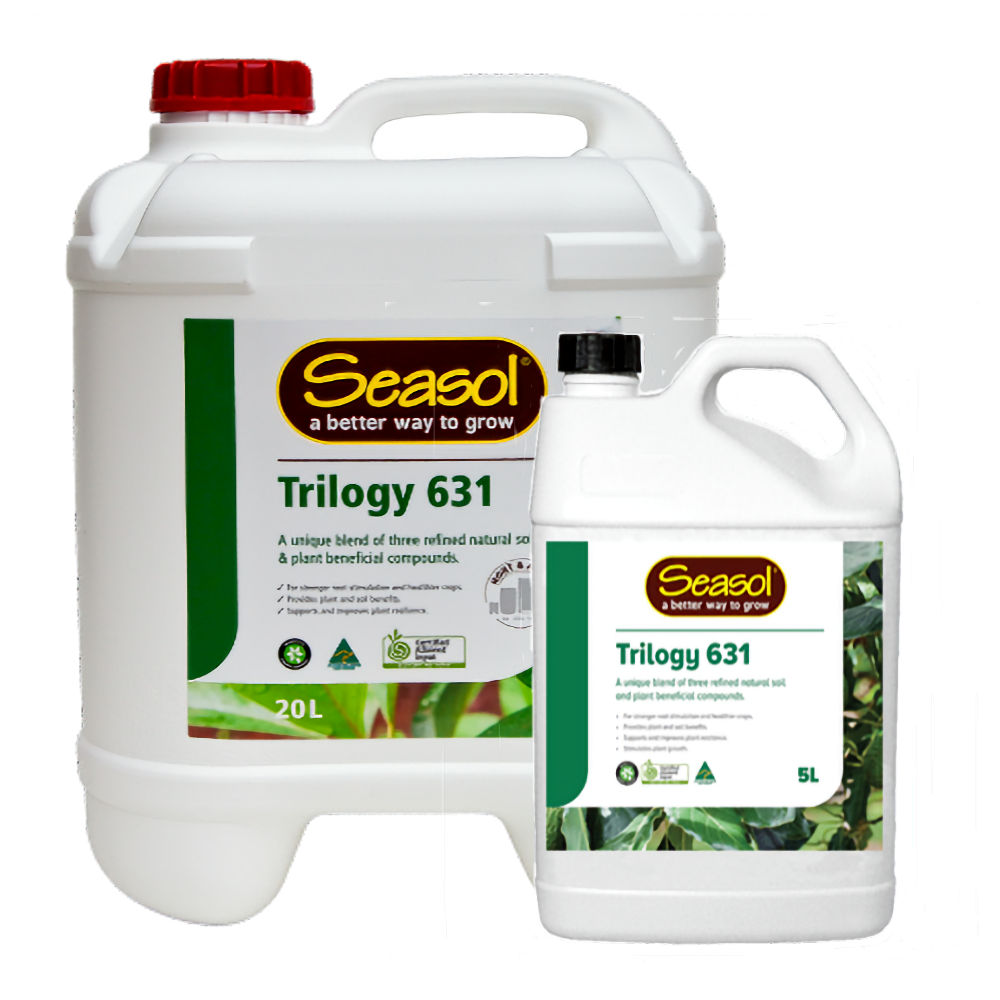
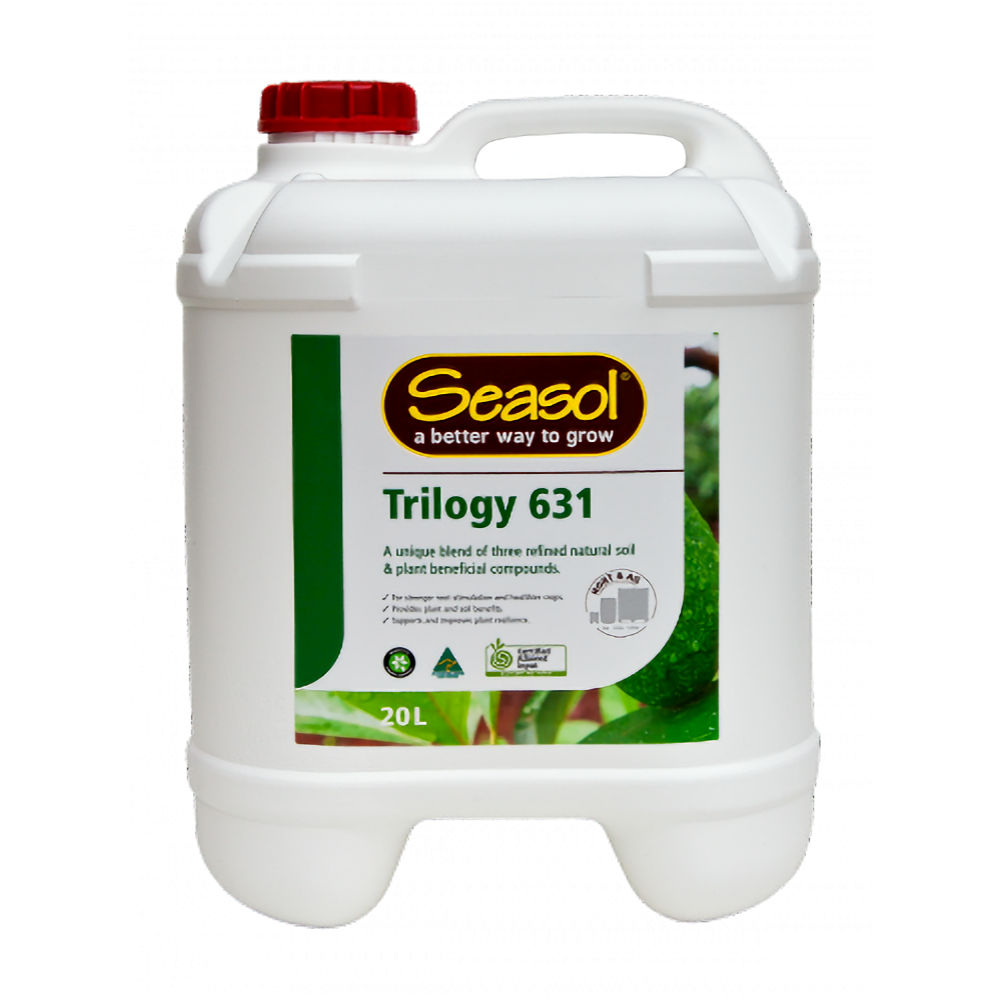
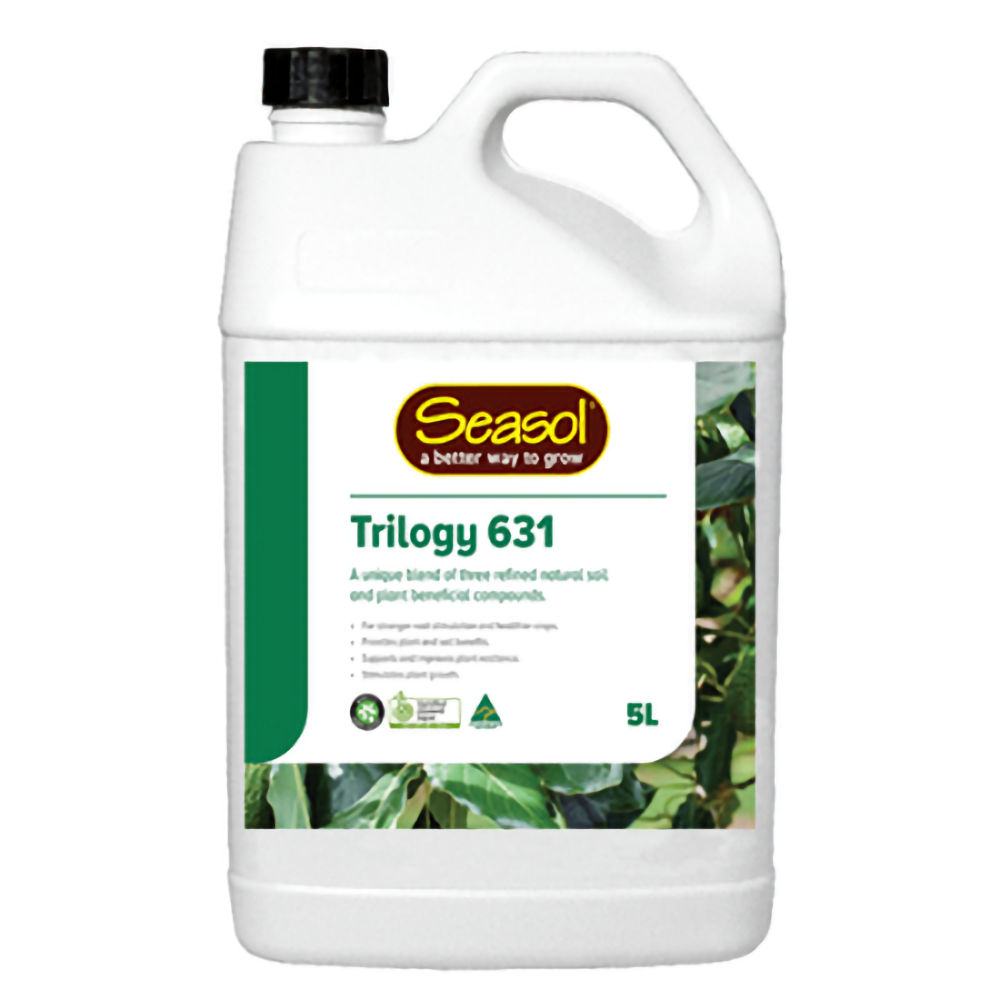
Description
Seasol Trilogy 631 is a three-in-one liquid biostimulant that combines Seasol seaweed extract (60%), PowerFish liquid fish extract (30%), and organic liquid humate (10%) to drive plant growth and restore soil health across Australian horticultural and broadacre crops. As a result, producers get root stimulation, organic nitrogen, and accessible carbon from a single drum. In addition, it holds certification as an allowed organic input (ACO Cert. No. 10767).
Manufactured in Australia by Seasol International Pty Ltd, it delivers a typical analysis of N 1%, P 0.2%, and K 3.5% (w/v), along with 6% total organic carbon. Consequently, it suits growers who need to fix biological gaps in depleted soils while also boosting crop tolerance to heat, drought, and frost.
Seasol Trilogy 631 Biostimulant: How It Works
Each component in the Seasol Trilogy 631 formula targets a specific function within the soil-plant system. The Seasol seaweed extract promotes root structure and increases plant tolerance to non-lethal climatic stresses. Meanwhile, the PowerFish extract supplies organic nitrogen as free amino acids and partially digested protein, which plants and soil microbes absorb rapidly with minimal leaching risk. The liquid humate fraction provides accessible carbon in the form of humic and fulvic acids, which improve soil aggregation, water-holding capacity, and microbial activity.
Together, these three extracts prime the photosynthesis carbon pathway. As root systems expand, plants pump more exudates into the rhizosphere, feeding soil microbiology and accelerating the carbon and nitrogen cycles. This process builds soil organic matter over successive applications.
What Crops Can You Treat with Seasol Trilogy 631?
Seasol Trilogy 631 works across a wide range of crop categories, as shown below.
| Category | Crops | Rate |
|---|---|---|
| Nut Trees | Almonds, Hazelnuts, Macadamias, Pecans | 8.5–17 L/ha or 1.7 mL per sq m of plant area |
| Deciduous Fruit Trees | Pome Fruits, Stone Fruits, and other deciduous species | 8.5–17 L/ha or 1.7 mL per sq m of plant area |
| Evergreen Tree Crops | Avocados, Bananas, Citrus, Olives | 8.5–17 L/ha or 1.7 mL per sq m of plant area |
| Fruiting Annuals | Capsicums, Cucurbits, Strawberries, Tomatoes, Pumpkins | 8.5 L/ha |
| Leafy Vegetables | Asparagus, Brassicas, Celery, Herbs, Lettuces | 8.5 L/ha |
| Root Vegetables | Carrots, Onions, Potatoes, Sweet Potatoes | 17 L/ha |
| Vine and Berry Crops | Blueberries, Raspberries, Wine and Table Grapes | 8.5–17 L/ha or 1.7 mL per sq m of plant area |
| Broadacre | Canola, Cotton, Pasture Crops (incl. Lucerne), Sugar Cane, Turf | 8.5–17 L/ha or 1.7 mL per sq m of plant area |
Frequently Asked Questions
Can Seasol Trilogy 631 be applied through fertigation systems?
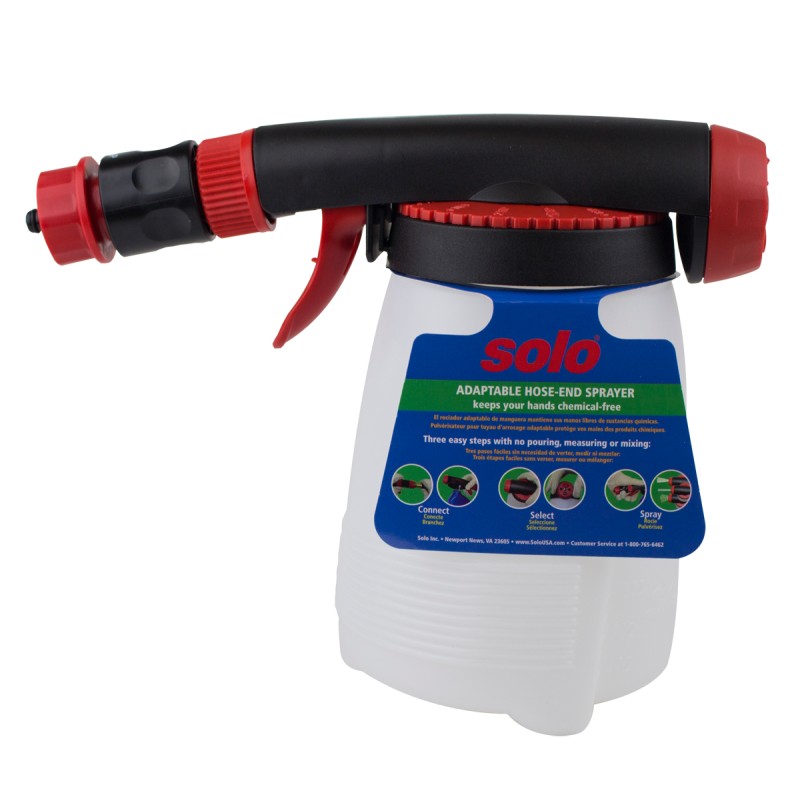
Yes. Agitate the product regularly in the fertigation tank. It can also be applied via boom sprays, air blast sprays, drip systems, travelling irrigators, centre pivots, and aerial equipment.
Is Seasol Trilogy 631 compatible with other agricultural chemicals?
It can be mixed with a number of agricultural chemicals. However, do not combine it with calcium nitrate. Check tank mix compatibility information at www.seasol.com.au before mixing.
How quickly should the diluted product be used?
Once diluted, apply within 24 hours for best results.
Typical Analysis
| Element | Amount | Units |
|---|---|---|
| Nitrogen (N) | 1 | % w/v |
| Phosphorus (P) | 0.2 | % w/v |
| Potassium (K) | 3.5 | % w/v |
| Calcium (Ca) | 2000 | mg/L |
| Iron (Fe) | 340 | mg/L |
| Sulphur (S) | 3100 | mg/L |
| Sodium (Na) | 7000 | mg/L |
| Boron (B) | 20 | mg/L |
| Zinc (Zn) | 12 | mg/L |
| Manganese (Mn) | 7 | mg/L |
| Copper (Cu) | 1.35 | mg/L |






What others are saying
There are no contributions yet.