


Termites in Australia: What to know and how to control them
Table of Contents
Of all natural threats to timber structures, including fire, storms, and floods, termites are consistently the most destructive, costing homeowners and businesses millions of dollars in damage a year. These pests are tough to spot, prevalent in Australia, and require smart strategies for complete control, which is why it’s critical to take preventative measures.
In our extensive experience consulting on termite issues around Australia, we’ve seen countless homes and buildings irreversibly affected. Structural timber damage from termite attacks can occur within months of a hidden infestation, often long before visible signs are evident.
Throughout this guide, we’ll explore what termites are, why they are so harmful, and the key control methods you can implement, including baiting systems, chemical sprays, and liquid barrier treatments, all available at Specialist Sales from well-known brands.
What are termites?
Termites are social insects that live in large colonies. While they are commonly referred to as white ants, they are not ants, and in fact belong to the insect order Isoptera, meaning ‘equal wings’.
There are roughly 350 termite species found in Australia, but only 20 to 30 of these are responsible for attacking and damaging buildings. Out of these, the most significant group of pest termites are subterranean termites. These species live underground, build extensive underground ‘galleries’, and work silently to reach and consume timber and other sources of cellulose.
Some notably destructive species include Coptotermes (e.g., C. acinaciformis) and Schedorhinotermes. Both are capable of tunnelling vast distances underground and eating structural timber undetected.
What is the termite threat landscape in Australia?
Typical Australian home construction has been found to increase termite risk. Slab-on-ground buildings with minimal soil clearance, timber framing, and landscaped gardens close to perimeters all offer easy access points for foraging termites.
Once termites enter a structure, they feed quietly within the walls, under floors, and behind skirting boards. Their presence may go unnoticed until symptoms like blistered flooring, mud tubes, or discarded wings become evident. By then, it’s likely structural damage will be advanced, which is why prevention and early control are so imperative – especially in Australia.
What termite control methods are available?
There are two key strategies for controlling termites in Australia – baiting systems and chemical barrier treatments, which take the form of either liquid sprays or soil termiticides.
Let’s break down each option and their pros and cons relative to your needs.
Termite baiting systems
What are termite baits and how do they work?
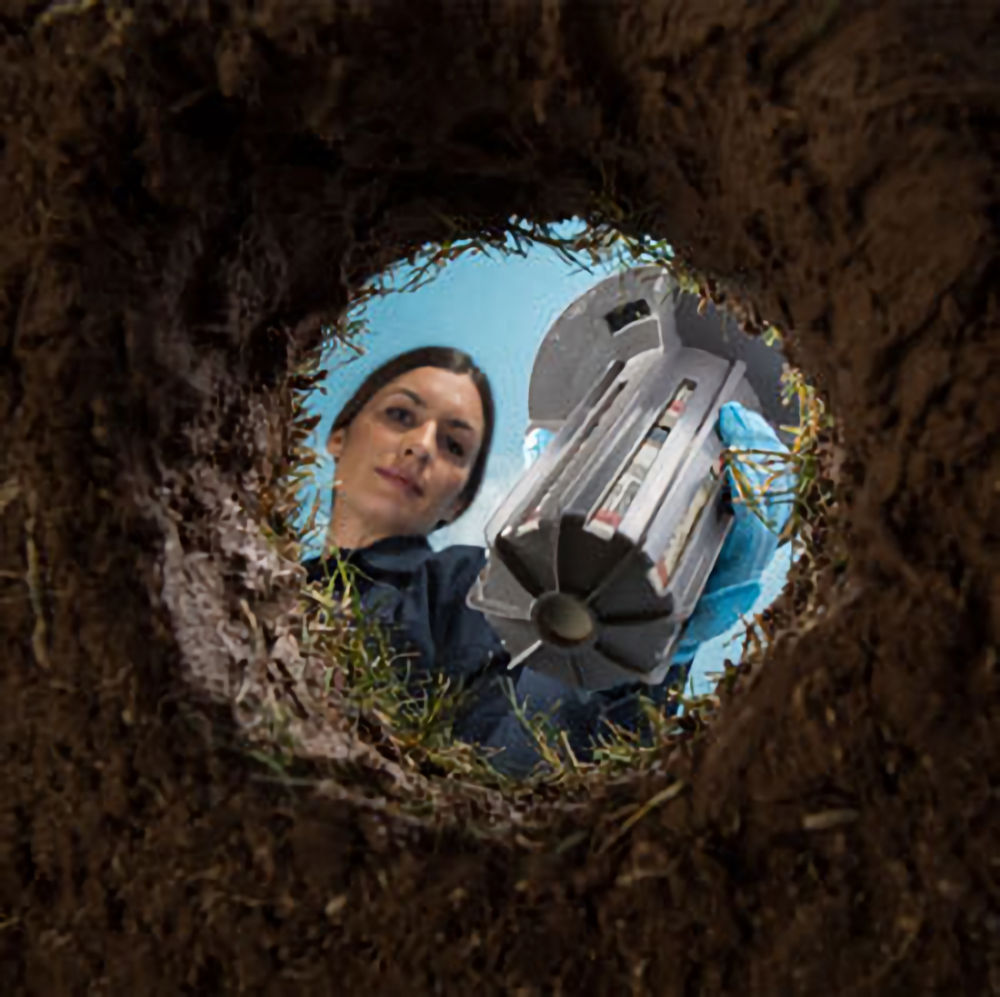
Termite baits are anti-termite systems that rely on the pest’s natural foraging behaviour. Instead of spraying chemicals directly, termite bait stations are filled with bait and placed into the ground around a property to intercept foraging termites before they reach a building’s structure. They are designed with a large cavity to attract and hold bait for termite feeding.
Bait stations attract termites, encouraging them to feed on the toxic bait and bring it back to their colony. Over time, the bait spreads through the termite population, leading to suppression or total elimination (kill).
These stations are suitable for both DIY users and pest professionals.
Selecting the right termite bait for a bait station
Specialist Sales offers a range of termite baiting tools to help homeowners and technicians alike intercept and target termite activity.
One of the most popular options is the Trelona Termite Bait. This high-performance bait contains novaluron, a modern insect growth regulator. It’s designed for use with termite bait stations and can operate as either a monitoring system or an ‘active on application’ solution for year-round protection.
The Trelona Termite Bait is effective against the major subterranean termite species found in Australia, and is designed to encourage termites to feed and carry the bait back to the colony. As it spreads throughout the colony, it disrupts growth and eventually leads to colony decline.
When using termite baits is the right choice
Termite baiting is a particularly effective strategy when:
- Soil conditions make barrier spraying difficult
- Structures have limited soil access beneath the foundation
- Homeowners are seeking a more targeted, environmentally contained approach
- Ongoing termite monitoring is preferred to one-off treatments
Importantly, baiting requires regular inspection of stations and replenishment of bait as it is consumed by termites. While baiting systems can control colonies, this option typically does not create the same impermeable barrier as chemical soil treatments.
Often, the best approach is to integrate baiting systems and monitoring with a soil barrier (i.e., a chemical soil treatment) to protect structures and eliminate colonies simultaneously.
Chemical barrier treatments (liquid termiticides)
Chemical barrier treatments create a protective zone in the soil around or under a building that termites cannot cross without coming into contact with termiticide. Modern products fall into two categories:
- Repellent termiticides: Where termites are deterred from the treated zone.
- Non-repellent termiticides: Where termites unknowingly pass through and carry the chemical back to their nest, leading to colony suppression or elimination.
Choosing the right termiticide
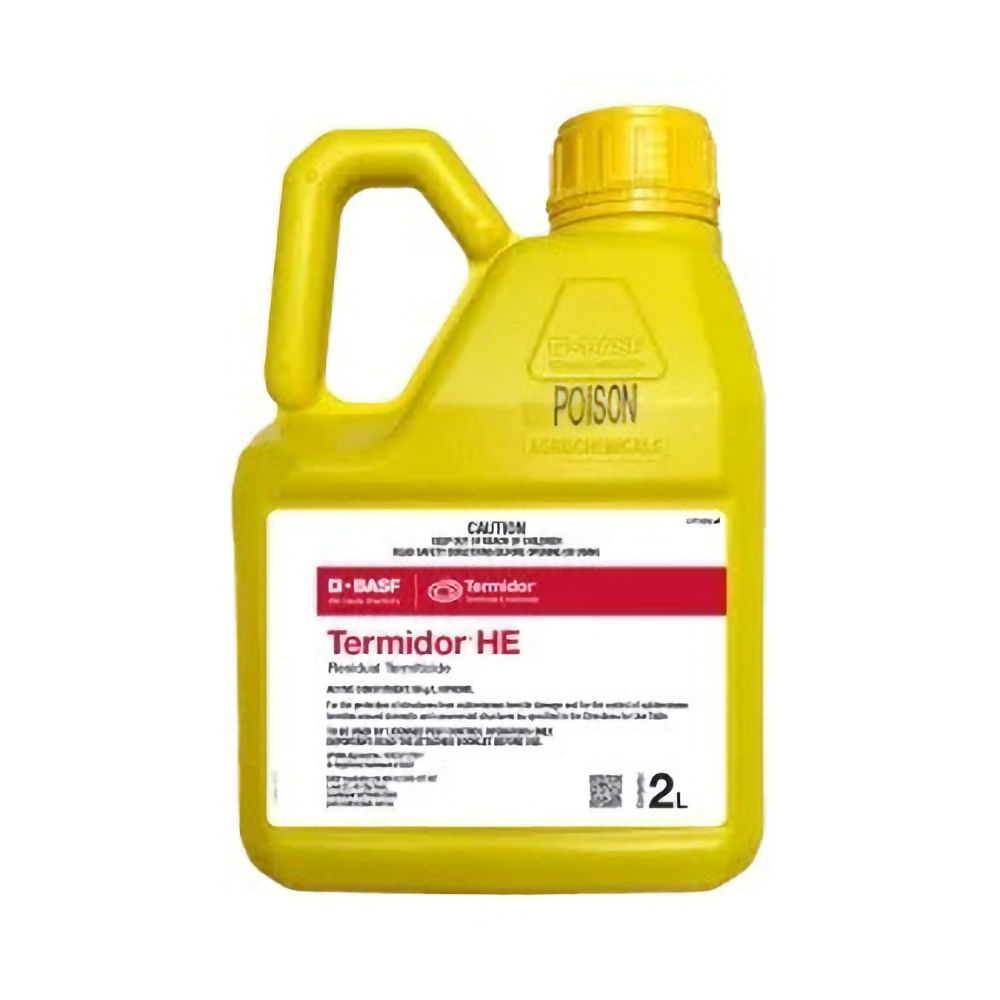
A commonly used and effective in Australia is Termidor Residual Termiticide & Insecticide, which relies on the active ingredient fipronil. It’s a professional-grade liquid formulation that uses non-repellent technology that cannot be detected by termites. Once termites pass through the treated area, they pick up the chemical and spread it throughout their colony, leading to control or elimination.
Termidor is widely regarded in Australia as a benchmark product for subterranean termite control thanks to its excellent residual performance and transfer effect.
Other chemical treatments include:
- Fipronil: Non-repellent and effective against termite colonies
- Bifenthrin: Repellent and suitable for preventative barriers
- Imidacloprid: Non-repellent with slower action but long residual activity
Each of these active ingredients has its place in termite management programs. Typically, non-repellent termiticides like fipronil are preferred when termite eradication is the goal, as termites will not detect the chemical in the soil and therefore, will not avoid the area.
How to create a termite chemical barrier
Chemical termite barriers involve treating the vertical soil zone around a building’s perimeter and, where possible, under slabs. This usually requires:
- Trenching around the slab edge or footing
- Injecting the termiticide into the soil
- Ensuring continuity of the treated zone with no breaks or bridging
A continuous treated zone will form a chemical barrier that termites cannot cross without coming into contact with the termiticide. Non-repellent termiticides like Termidor are effective when creating a chemical barrier as termites forage through the treated soil without avoidance. Then, they return to the colony and spread the chemical.
What is an integrated termite management program?
Most professional pest controllers in Australia advocate for integrated termite management programs, which are systems that combine a number of factors for best results.
The components of a good management program are:
- A soil termiticide barrier
- Termite bait stations
- Regular inspections and monitoring
- Moisture control around structures
- Good site management and landscaping practices
This integrated approach improves long-term termite protection, permitting early detection and suppression of pests whilst maintaining a protective barrier to avoid reinfestation.
What are the practical and safety considerations when treating termites?
Prior to treating termite infestations at home, consider the following practical and safety guidelines:
- APVMA registration: All chemical pesticides used for termite control must be registered with the Australian Pesticides and Veterinary Medicines Authority (APVMA). Major products like Termidor are APVMA registered, meaning they have been evaluated and approved for use in Australia.
- Standards compliance: All termite treatments should comply with Australian Standard AS 3660. This ensures termite control meets best-practice performance standards and complies with building codes and insurance requirements.
- Installation: While some products (such as bait stations) can be installed by knowledgeable homeowners, chemical barrier installation requires a licensed applicator. Improper application can leave gaps in the barrier, reduce effectiveness, and breach building codes.
How to prepare your property and reduce termite risk
Before implementing any termite management system, it’s critical to reduce risk as much as possible. Chemical or termite baiting systems are at their most effective when termite infestations are not aided by factors like:
- Moisture issues (leaking pipes, poor drainage, garden beds against foundations)
- Timber contact with soil
- Stored timber or debris near the building
Eliminating moisture and food sources can also reduce termite attraction and support the effectiveness of your control system.
How to make an informed decision about termite control
Given Australia’s high risk of termites – due to building designs, climate, and soil types – termite management here requires smart, tailored strategies.
By combining bait stations and bait (e.g., Trelona Termite Bait) for targeted colony interception with a liquid termiticide (e.g., Termidor Residual Termiticide & Insecticide) for a protective barrier, you can implement effective control that works with Australian standards and conditions.
Remember, the most successful termite control programs involve professional assessment, strategic system design, and regular monitoring and maintenance, rather than one-off treatments.
Need support constructing the right termite management system for your home or business? We’d love to help you find products to suit your needs – get in touch with the Specialist Sales team for expert advice.
About the author