



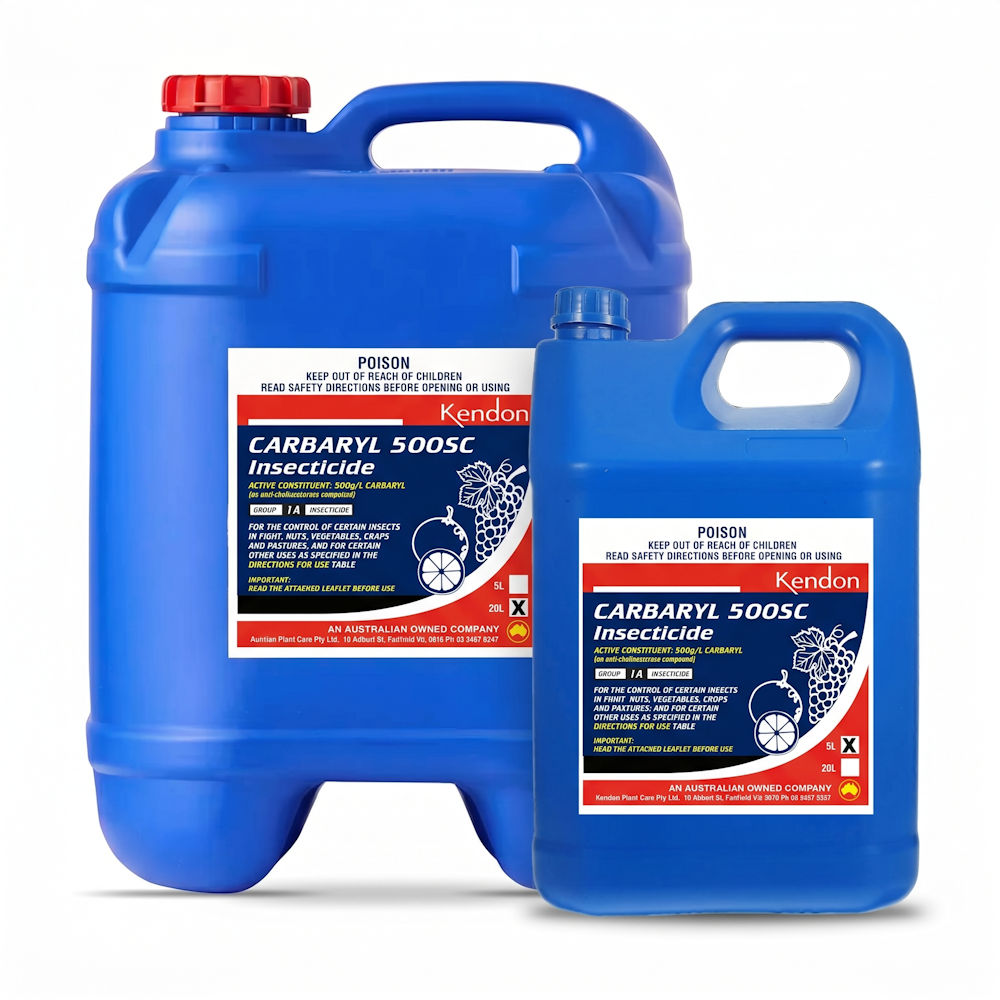
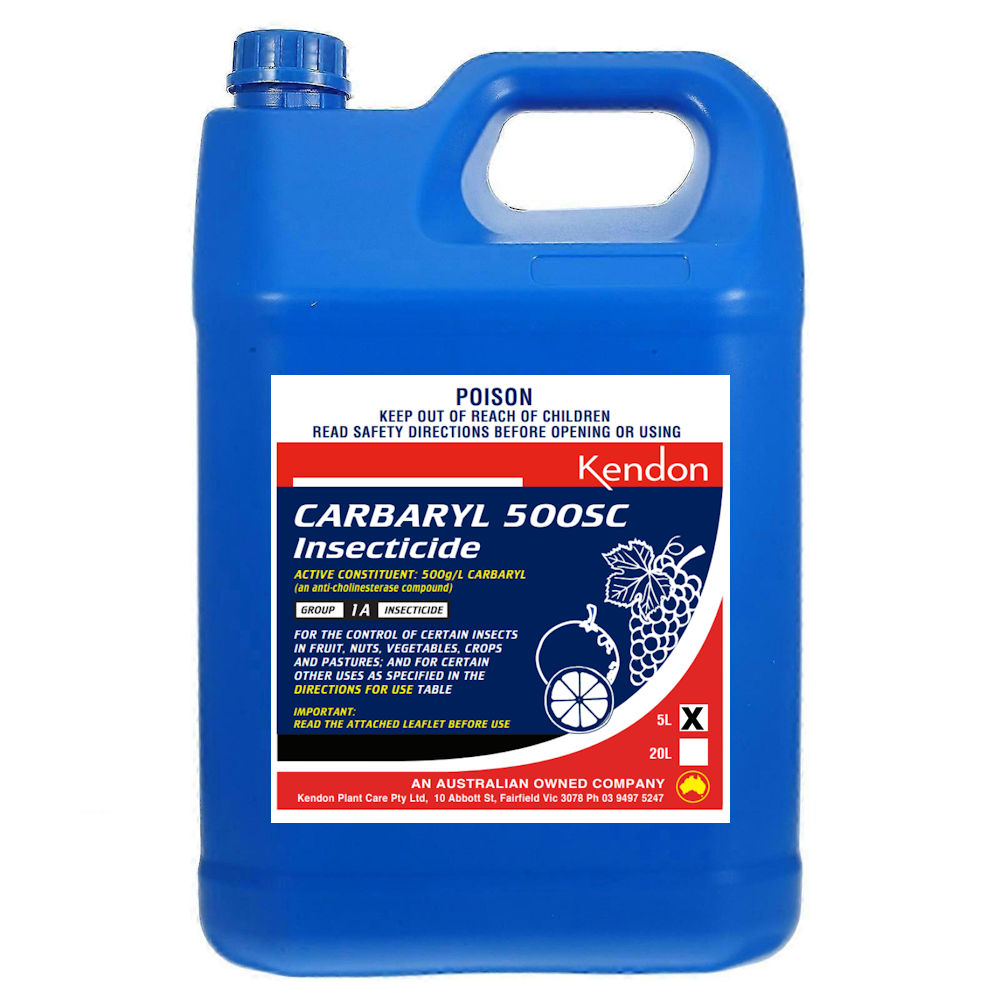
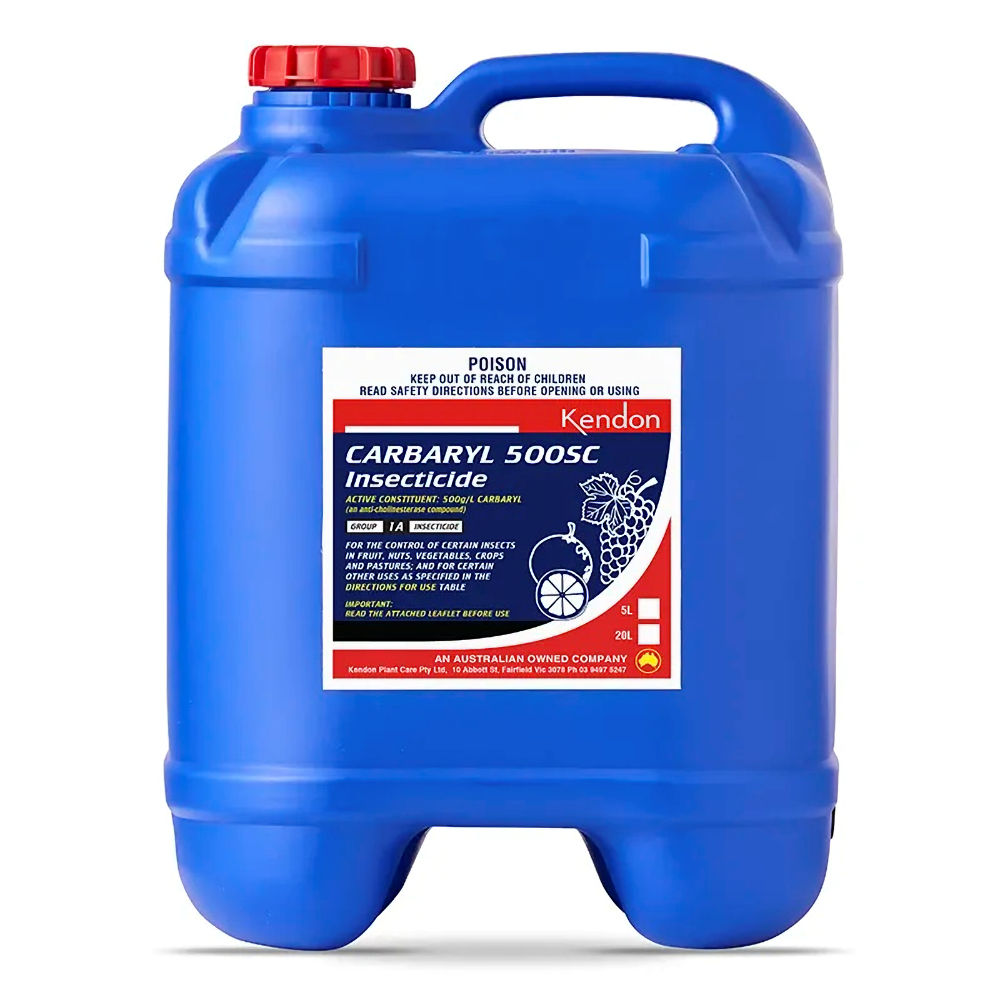
Description
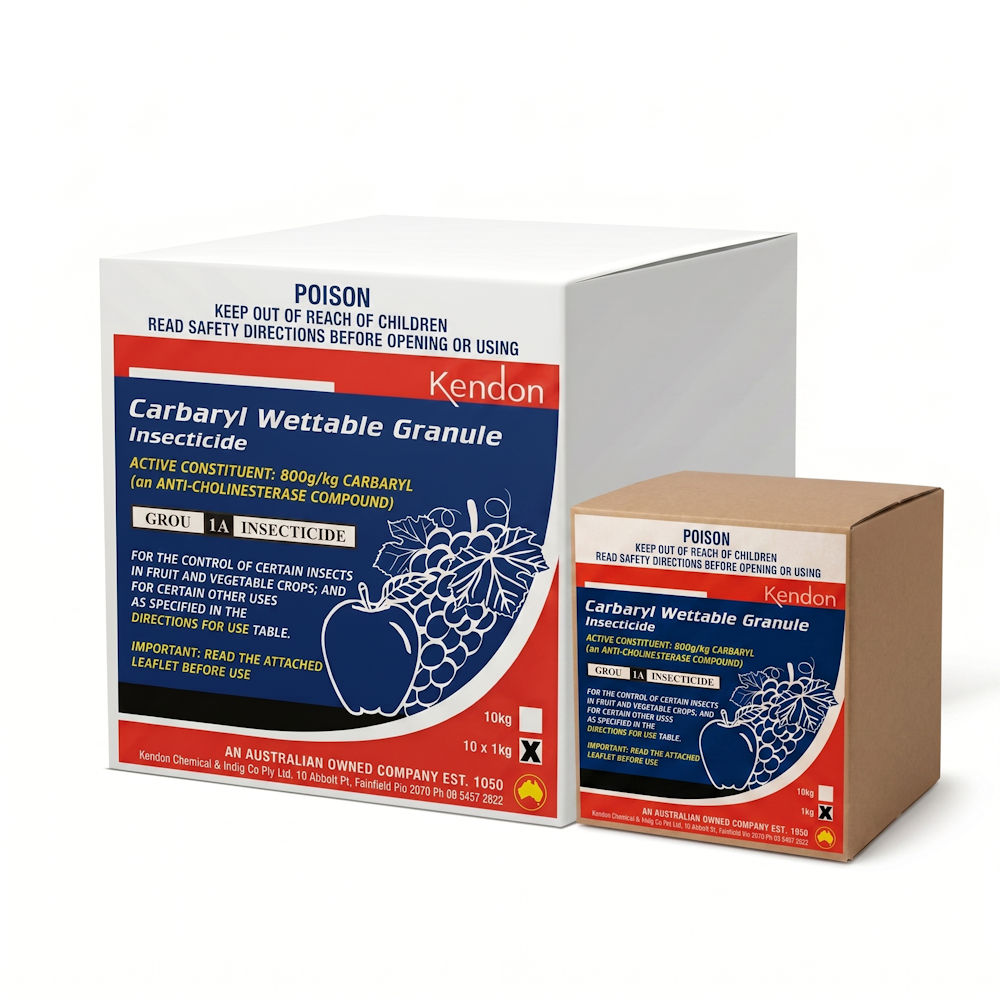
Kendon Carbaryl 500SC Insecticide contains 500 g/L carbaryl, a Group 1A anti-cholinesterase compound. It controls a wide range of chewing and sucking insects across fruit, nuts, vegetables, field crops and pastures. Growers reach for it when caterpillars, beetles, grasshoppers, locusts and bugs threaten a crop. Moreover, the suspension concentrate formulation mixes readily and leaves useful residual cover on treated foliage.
Broad-spectrum carbaryl 500SC insecticide for fruit, vegetables, crops and pastures
Carbaryl works as a contact and stomach insecticide. Therefore, it suits situations where chewing pests feed openly on leaves, stems and developing fruit. Registered targets include heliothis, armyworms, cutworms, loopers, light brown apple moth, codling moth and leaf-eating beetles. In addition, the label covers wingless grasshopper, locusts, green vegetable bug, Rutherglen bug, weevils and several scale species. As a result, one product handles many of the common orchard, vegetable and pasture pests in a single program.
Where it fits across the farm
Kendon Plant Care has registered this product for tree and vine crops, fruit and vegetables, field crops, pastures, ornamentals and industrial situations. For example, it treats pome fruit, stone fruit, citrus, mangoes, macadamias, cucurbits, potatoes, cereals, sorghum, cotton, lucerne and rice. Furthermore, growers use it on pome fruit for fruit thinning between 7 and 28 days after full bloom. It also controls European wasps, honey bees in concealed hives and earwigs around buildings.
Resistance management and mixing
Because carbaryl sits in Group 1A, rotation with other mode-of-action groups protects its performance. Consequently, the label carries a full resistance warning for repeated use. The product is combined in the spray vat with copper oxychloride, dimethoate, dicofol, carbendazim, summer spray oil and wettable sulphur. However, do not mix it with lime sulphur, Bordeaux mixture or other alkaline materials. Always test any unfamiliar tank mix before treating commercial quantities.
Frequently Asked Questions
Q. What is the active ingredient in Kendon Carbaryl 500SC?
A. The active constituent is 500 g/L carbaryl. Carbaryl is an anti-cholinesterase compound. It belongs to insecticide Group 1A.
Q. Is Kendon Carbaryl 500 SC comparable to Bugmaster Flowable Insecticide?
A. Yes. Both products contain 500 g/L carbaryl in a flowable suspension concentrate. Both come in 5-litre and 20-litre packs. Both control chewing and sucking pests in fruit, nuts, vegetables, crops and pastures. In addition, both thin pome fruit and treat lawn grub in turf. The main difference is the registrant. Kendon Plant Care Pty Ltd makes the 500 SC, while Ag Nova makes Bugmaster. Therefore, growers can generally choose based on price and availability. Always compare both labels before you substitute one for the other.
Q. What pests does Carbaryl 500SC control?
A. It controls chewing and sucking insects. These include caterpillars, beetles, grasshoppers, locusts and bugs. The label also lists scale, weevils and earwigs.
Q. Can I use Carbaryl 500SC on fruit trees?
A. Yes. The label registers it for pome fruit, stone fruit, citrus, mangoes and nuts. Always check the withholding period for each crop first.
Q. Is Carbaryl 500SC harmful to bees?
A. Yes, carbaryl is dangerous to bees. Therefore, do not spray plants in flower while bees are foraging. Time applications to avoid foraging periods.
Q. What pack sizes are available?
A. Specialist Sales supplies Carbaryl 500SC in 5-litre and 20-litre containers. Both suit commercial and broadacre programs. Kendon Plant Care Pty Ltd manufactures the product.
Q. Can I use Carbaryl 500SC in turf?
A. Yes, Carbaryl is registered for use on bowling greens, golf green turf, and lawn grass to target crown mealybug and lawn grubs.






What others are saying
There are no contributions yet.