



Insecticides
Showing 61–72 of 74 results
-

Starrdust-Pro Insecticidal Powder
$195.00(GST Incl.) -

Success Ultra Insect Control
$70.00(GST Incl.) -

Surefire Exclaim Insecticide (Emamectin)
$195.00(GST Incl.) -

Surefire Macromite Miticide
Price range: $275.00 through $955.00(GST Incl.) -

Surefire Pro Cockroach Gel
$50.00(GST Incl.) -

Surefire Trepidex 500 Insecticide
Price range: $165.00 through $399.00(GST Incl.) -

Surround Termiticide (Bifenthrin)
Price range: $95.00 through $165.00(GST Incl.) -

Synergy Pro Ant Bait
Price range: $90.00 through $380.00(GST Incl.) -
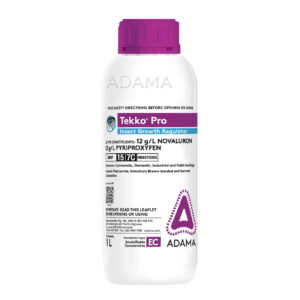
Tekko Pro Insect Growth Regulator
Price range: $75.00 through $110.00(GST Incl.) -

Termidor Foam Termiticide & Insecticide
$100.00(GST Incl.) -

Venom Professional 240SC Insecticide
$235.00(GST Incl.)Out of Stock
-

Viento 240SC Insecticide
Price range: $795.00 through $2,935.00(GST Incl.)
Why are insecticides important for farming?
Insecticides are critical for farming as they allow farmers to manage the risks associated with pest insects, and subsequently, weather, weeds, and diseases. Insecticides play a pivotal role in protecting crop yield and ensuring long-term success.
What are the consequences of not using insecticides?
Without insecticides, pest outbreaks can quickly occur, leading to significant consequences for farmers. These include lower crop yields, complete crop failure, and, as a flow-on effect, loss of income.
What types of insecticides are available in Australia?
There are a number of insecticide formulations available on the Australian market. The most popular are liquid concentrates, dry powders, granules, and seed treatments.
- Liquid concentrates: Mixed with water and sprayed onto the plants using a boom sprayer or aerial application method.
- Dry powders: Applied directly to the soil or mixed with water. Also known as dust.
- Granules: Distributed in the soil or mixed with water, similarly to dry powders.
- Seed treatments: Designed to coat the seed before it is planted to protect it from insects during germination.
How are insecticides applied?
Application directions for insecticides will depend on your chosen formulation, the insect/s you’re dealing with, the type of crop, and the timing of the outbreak.
The most common methods are boom spraying and aerial application, which both allow for quick ground coverage. This is usually used with liquid insecticide formulas.
Granular insecticides may be applied directly to the soil to target pests that attack the plant’s root systems or live underground. Seed treatments are also commonly used to protect the seed during germination. These are applied through seed coating.
Not sure which insecticide formula and application method will best suit your circumstances? Refer to the product label, or get in touch with our team of experts for tailored advice.
When should insecticides be applied?
Farmers should only use insecticides when needed – that is, when they’re experiencing an infestation of pests. It’s critical to monitor crops regularly after insecticides are applied, particularly during the growing period.