


When to Fertilise Your Lawn: A Complete Australian Guide
Table of Contents

Fertilising your lawn can help to reduce weeds, pests, and disease, as well as encouraging strong and even plant growth. Importantly, though, timing matters. By applying fertiliser at the wrong point in the season, you can do more harm than good, feeding weeds instead of grass or pushing soft growth right before stress hits.
This guide covers what fertilising your lawn actually does, when to apply fertiliser based on your grass type, and which product to choose to suit your lawn care program. Keep reading to find the right advice for your circumstances.
An overview of fertilisation
| LAWN FERTILISING QUICK FACTS | |
|---|---|
| What it does | Replenishes nitrogen, phosphorus, potassium, and trace elements grass loses through mowing, watering, and leaching |
| Key nutrients | Nitrogen, phosphorus, and potassium (NPK), plus iron and sulphur in many blends |
| Main formats | Granular, foliar (liquid), and biostimulant products |
| Warm-season lawns (buffalo, couch, kikuyu, zoysia) | Feed in spring, summer and autumn |
| Cool-season lawns (fescue, rye, Kentucky bluegrass) | Feed in spring and autumn |
| Once-yearly feeding | Feed in spring |
What is lawn fertilisation and why is it important?
Lawn fertilisation is the process of adding nutrients back into your lawn so it can grow and stay healthy. Like any other plant, grass needs a specific nutrient balance to survive and thrive. The most important nutrients are nitrogen, phosphorus, and potassium – usually abbreviated to NPK. Many fertilisers also include sulphur and iron, which support colour and growth efficiency.
While most lawns contain some of these nutrients naturally, they can be gradually stripped from the soil by processes like mowing, watering, and leaching. Fertilising restores the balance to support denser growth, stronger roots, and better resistance to weeds, pests, drought, and everyday wear.
What each nutrient does
| Nutrient | Role | Effect on your lawn |
|---|---|---|
| Nitrogen (N) | Drives leaf growth and chlorophyll production | Supports fast green-up and lush colour; usually the highest percentage in a lawn blend |
| Phosphorus (P) | Supports root development, especially in new turf | Strengthens root systems; moves slowly through the soil so only small amounts are needed |
| Potassium (K) | Builds cell wall strength and stress tolerance | Improves drought and disease resistance; helps the plant use nitrogen efficiently |
| Iron (Fe) | Supports chlorophyll formation | Creates a deep green colour without excess leaf growth |
| Sulphur (S) | Works alongside nitrogen for uptake efficiency | Improves colour, density, and overall growth response |
When to fertilise your lawn
The right time to fertilise depends on your grass type. Lawns respond best to feeding during their active growth periods, and pushing nutrients onto a dormant or stressed lawn can lead to wasted product and increased weed growth.
For warm-season grasses like buffalo, couch, Kikuyu, and zoysia, the current recommendation is to fertilise three times a year – in mid-spring, summer, and autumn. These grasses go dormant over winter and need a nitrogen boost as soil temperatures rise in spring to fuel their main growing season.
Cool-season grasses like fescue, rye and Kentucky bluegrass grow most actively in spring and autumn, and are best fertilised at those two points. They typically slow down over summer, so heavy feeding in the heat can do more harm than good. Instead, ease back and let the lawn get through the stress period.
If you plan on fertilising just once a year, spring is the best time to do so, regardless of grass type.
Seasonal feeding calendar
| Grass type | Spring | Summer | Autumn | Winter |
|---|---|---|---|---|
| Warm-season (buffalo, couch, Kikuyu, zoysia) | Feed | Feed | Feed | Dormant / no feed |
| Cool-season (fescue, rye, Kentucky bluegrass) | Feed | Ease back | Feed | Dormant / no feed |
Choosing the right fertiliser
Not all fertilisers achieve the same result, so it’s worth matching the format to your situation. When choosing a lawn fertiliser, consider your grass type, the time of year, your lawn’s current condition, and how you plan to apply it.
Our fertiliser range is organised into three key types: granular, foliar (liquid), and biostimulants.
Granular fertilisers
Granular fertilisers are solid, dry pellets. They are popular because they’re easy to apply evenly over a large area with a spreader, and many contain slow-release coatings that gradually feed the turf over 8 to 12 weeks.
Foliar (liquid) fertilisers
Foliar fertilisers are applied via hose applicators, pump sprayers, or boom sprays, delivering a faster response as nutrients can be absorbed through the leaves and roots. They suit smaller lawn areas well, as application can be controlled more precisely.
Biostimulants
Biostimulants are specialty products that address specific turf problems rather than acting as a straightforward feed – think stress tolerance, root efficiency, shade tolerance, or recovery after damage. Many are based on seaweed extracts, amino acids, or other natural compounds, and are used alongside a regular fertiliser program, not instead of one.
Biostimulant fertilisers are available in both liquid and granular formats.
Fertiliser type at a glance
| Format | Best for | Release speed | How it’s applied |
|---|---|---|---|
| Granular | Broad-area feeding, convenience, set-and-forget programs | Slow release; typically 8–12 weeks | Broadcast or drop spreader |
| Foliar (liquid) | Smaller lawns, fast green-up, correcting deficiencies | Fast; absorbed through the leaf and root within days | Hose applicator, pump sprayer, or boom sprayer |
| Biostimulants (liquid) | Stress tolerance, shade, recovery, root/soil health | Varies by product; supports rather than replaces feeding | Foliar sprayer; often tank-mixed or alternated with fertiliser |
How to fertilise your lawn
Once you’ve chosen the right fertiliser, the key to good results is applying the right amount correctly. Too much can burn your grass or cause other damage, whereas too little won’t give you the results you’re seeking.
Here are our top tips for fertilising your lawn for both granular and foliar (liquid) formats, of which biostimulant fertilisers may be one or the other.
Granular fertiliser application
- Use a broadcast spreader for even coverage over a large area, or a drop spreader for more precise, controlled application.
- Calibrate your spreader before you start. Check the product label for the correct setting.
- Start at one end of the lawn and work across in overlapping passes, about half a pass-width apart.
- Water the lawn deeply after applying to help the fertiliser reach the root zone.
- Avoid mowing for at least 24 hours after fertilising.
Foliar (liquid) fertiliser application
- Always check the product label first. Foliar fertilisers need a specific dilution and even coverage over a set area of turf, often in a minimum volume of water (for example, 100mL per 10L of water over 100m²).
- Apply via hose-end applicator, pump sprayer, or boom spray, keeping the passes even to avoid striping.
- Some products call for additional watering after application or before mowing – check the product label for recommendations.
How to fix an over-fertilised lawn
If you’ve applied too much fertiliser, don’t panic! There are a few steps you can take to help your lawn recover:
- Water deeply and frequently to dilute the fertiliser and prevent it from burning the grass.
- Mow the lawn short to reduce the number of blades exposed to excess fertiliser.
- Wait a few weeks before fertilising again to give the grass time to recover and grow back healthy.
Explore fertilisers at Specialist Sales
At Specialist Sales, we stock a wide range of lawn fertilisers – granular, foliar (liquid), and biostimulant products. Below is a selection of our most popular products across each category.
Granular fertilisers
| Product | Key nutrients and analysis | Pack sizes |
|---|---|---|
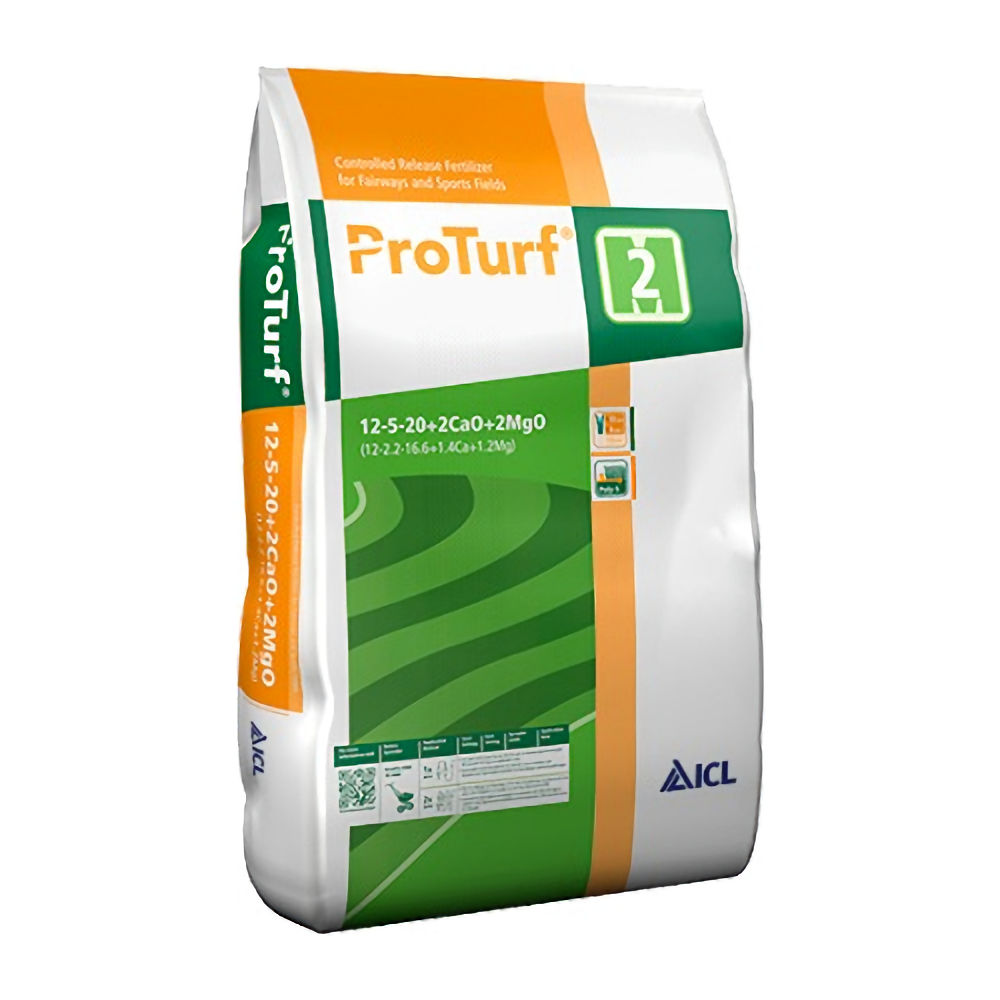
| ProTurf Hi N Fertiliser | High nitrogen (20% N) for fast green-up | 25kg |
| ProTurf Hi K Fertiliser | High potassium (16.6% K) for stress and disease resistance | 25kg |
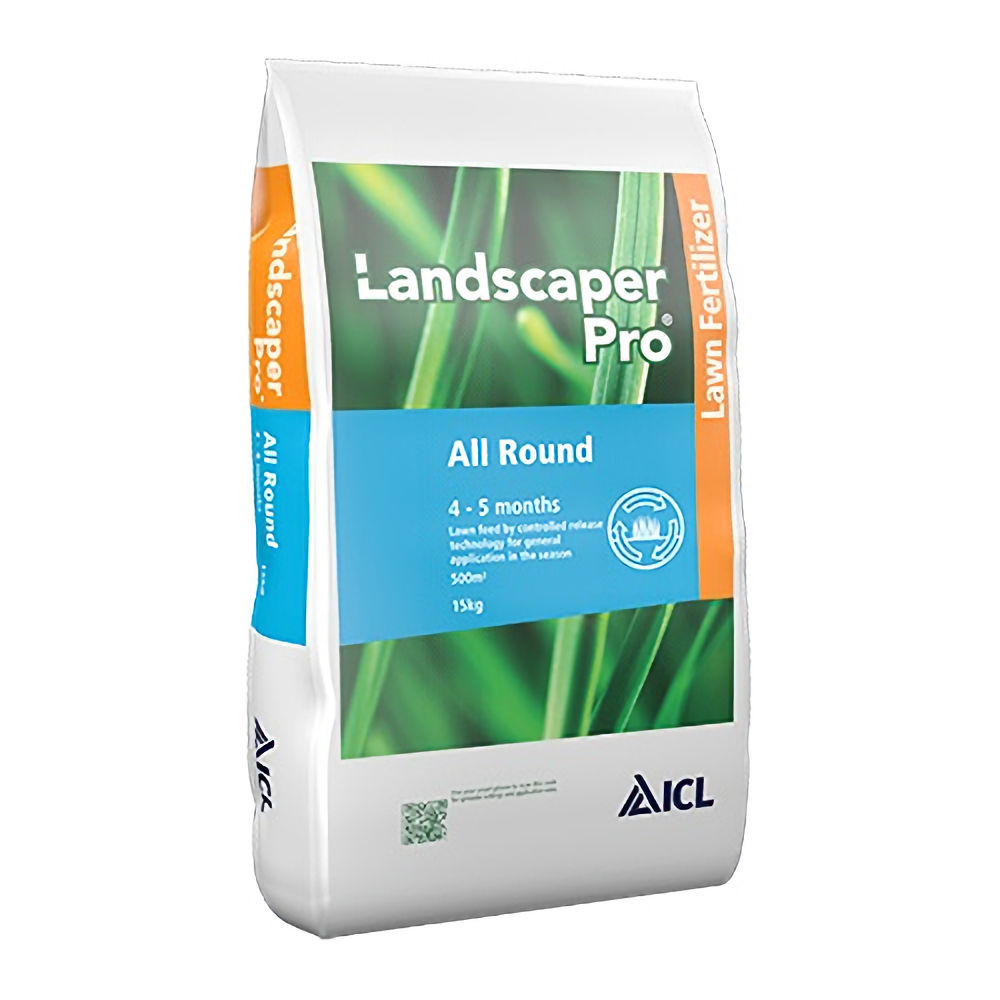
| Landscaper Pro New Grass Fertiliser | Establishment blend for new turf and lawns | 15kg |
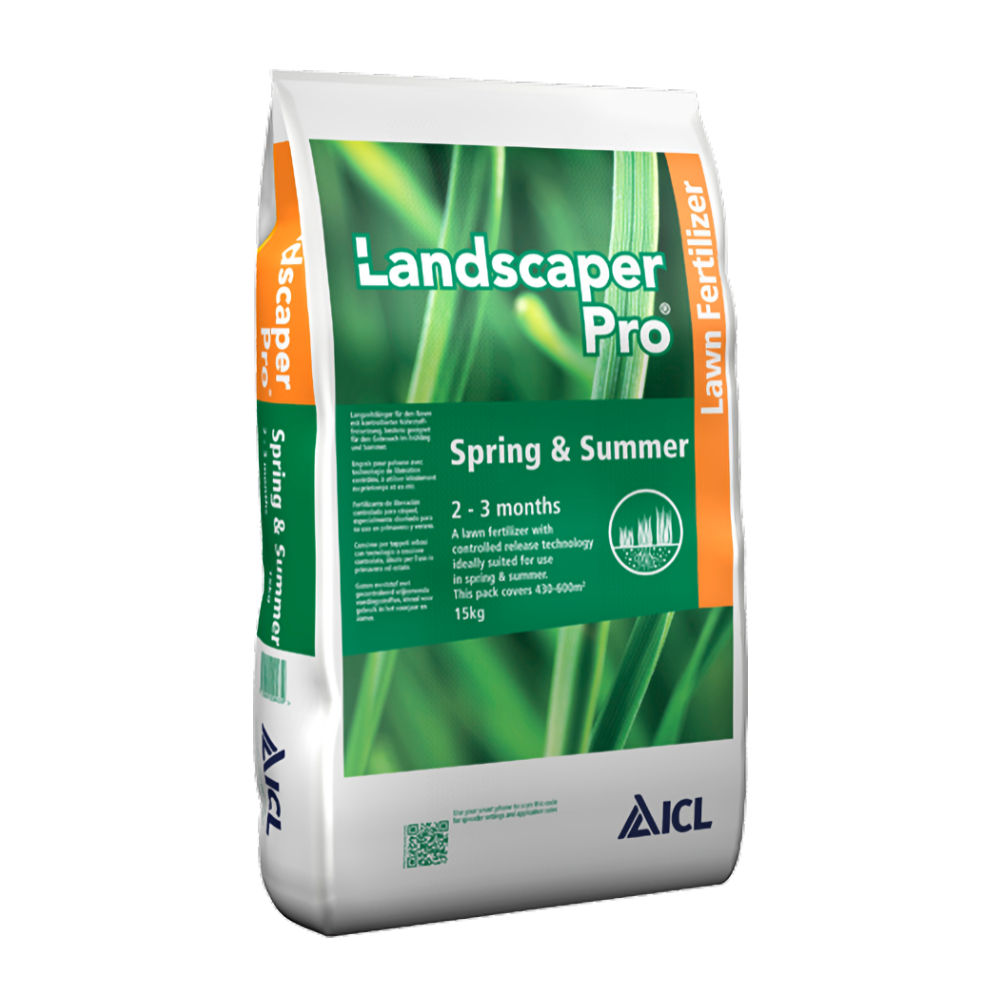
| Landscaper Pro Spring and Summer Fertiliser | Seasonal balanced feed for the growing season | 15kg |
| Golf Course Green Lawn Fertiliser | Mineral and nutrient blend for deep green colour | 2.5kg, 5kg, 10kg, 20kg |
Foliar / liquid fertilisers
| Product | Key nutrients and analysis | Pack sizes |
|---|---|---|
| LiquiMaxx GreenMaxxFertiliser | N-20, Fe-6, Mg-1 for fast green-up | 10L |
| LiquiMaxx N-MAXX 40 | N-40; high-nitrogen liquid nitrogen fertiliser | 10L |
| GMX Iron Plus Fertiliser | Fe-8, N-12, Mg-1 for colour without excess growth | 10L |
| Fights On Liquid Potassium | Concentrated potassium for energy and stress tolerance | 1L, 3.78L |
| X-Factor (4-4-16) | NPK blend for turf growth and hardiness | 1L, 3.78L |
Biostimulants
| Product | Key nutrients and analysis | Pack sizes |
|---|---|---|
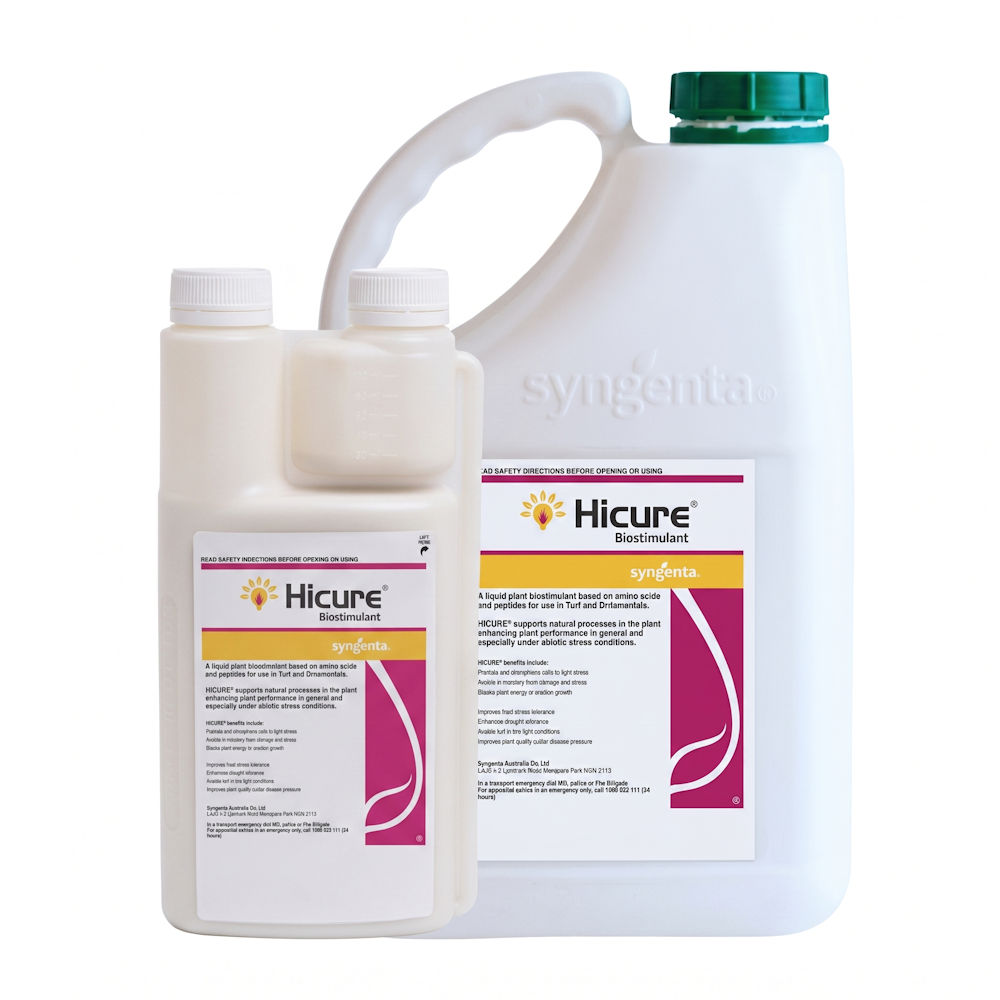
| Hicure Biostimulant | Builds, protects and helps turf recover from stress | 1L, 10L |
| Knife Plus Turf Biostimulant | 12-0-0+6 Fe; high nitrogen and iron for colour | 10L |
| High Five Turf Biostimulant | Maximises photosynthesis and root efficiency | 10L |
| Seasol Powerfeed Commercial Concentrate | Seaweed-based concentrate for overall plant health | 5L, 20L |
Product ranges and stock availability may change over time — browse the full, current range at specialistsales.com.au before ordering.
Frequently asked questions about fertilising
How often should I fertilise my lawn?
Warm-season lawns do best with three feeds a year in spring, summer, and autumn. Cool-season lawns are typically fertilised twice per year in spring and autumn. If you plan on fertilising just once a year, spring is the best time to do so.
Can I use a granular and a liquid fertiliser together?
Yes. Many lawn care programs combine a slow-release granular feed for broad, steady nutrition with a foliar or biostimulant product for a faster response or to address a specific issue like colour or stress. Always check label directions for combined or sequential use.
What happens if I fertilise at the wrong time of year?
Feeding a dormant or stressed lawn wastes product and can encourage weed growth instead of grass growth. It can also push soft, lush growth right before a stress period like summer heat or winter cold, leaving the lawn more vulnerable to weeds.
How do I know if I’ve over-fertilised?
Signs of over-fertilisation in lawns include scorched or burnt-looking patches, unusually dark or blue-green grass, or excessive, rapid leaf growth. Water deeply, mow short, and hold off on applying more fertiliser for a few weeks to let the lawn recover.
Getting lawn fertilisation right
Effective fertilisation comes down to matching the product and the format to your grass type, the season, and your lawn’s current condition. Use the advice above to find the right fit for you, and always apply at the rate and per the directions listed on your chosen product’s label.
If you’re not sure which fertiliser suits your lawn, our knowledgeable team is available to help.
This information and product advice is general in nature and is not intended as advice or a recommendation for any specific use or circumstance. Always read and follow the product label before use, and seek specialist advice for your situation. Specialist Sales’ liability is limited; please review our Terms and Conditions for more information.
About the author