



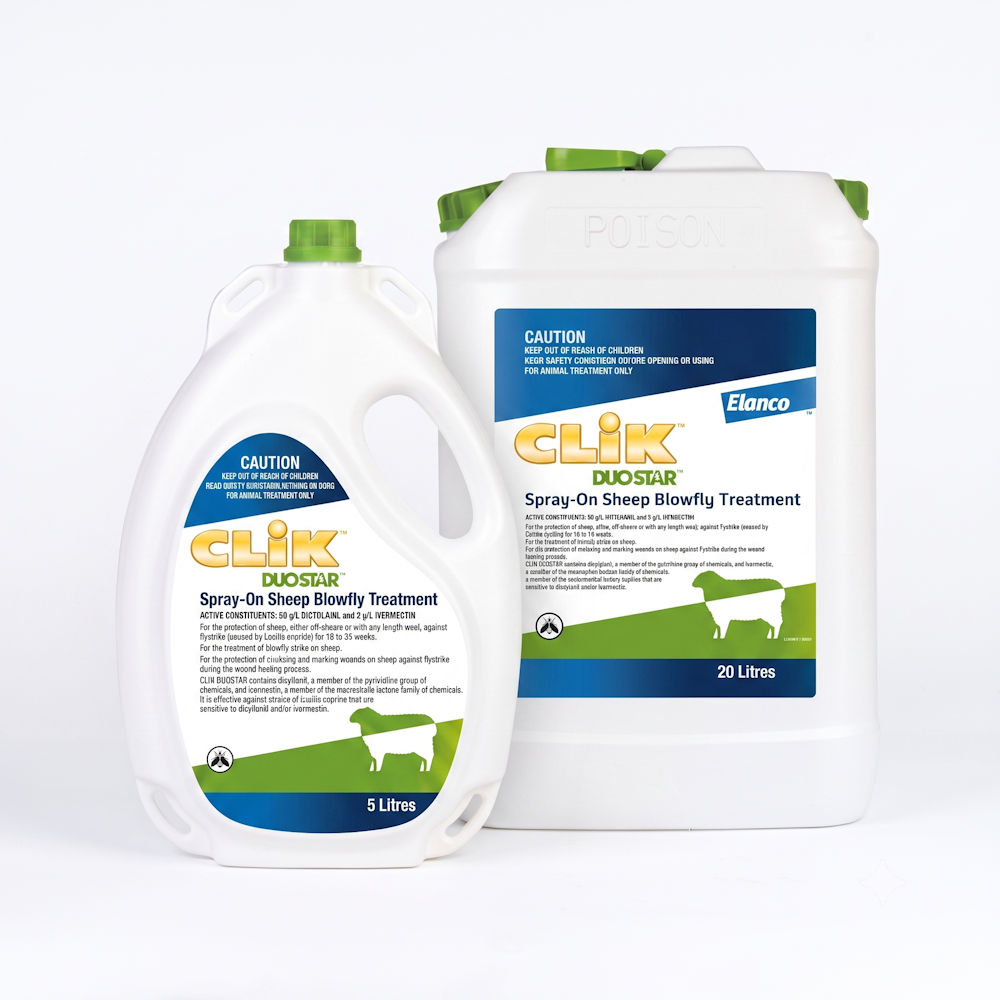
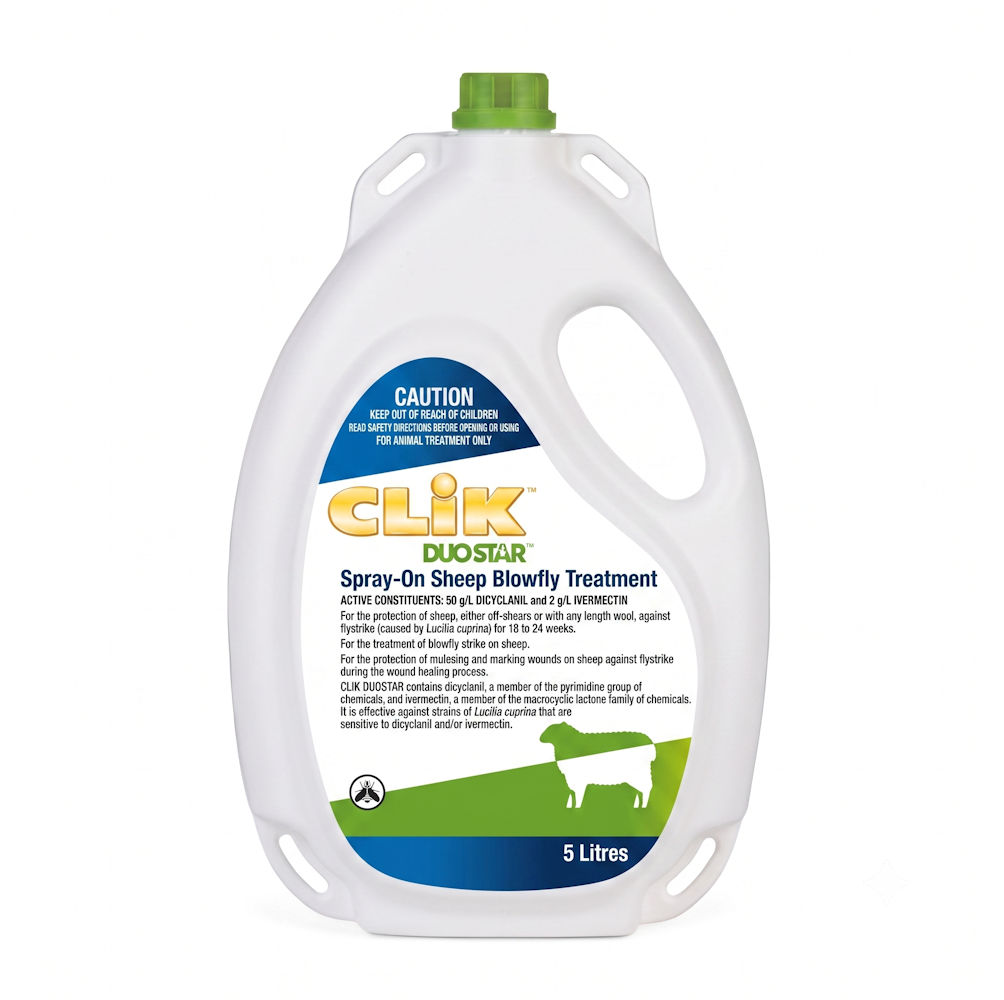
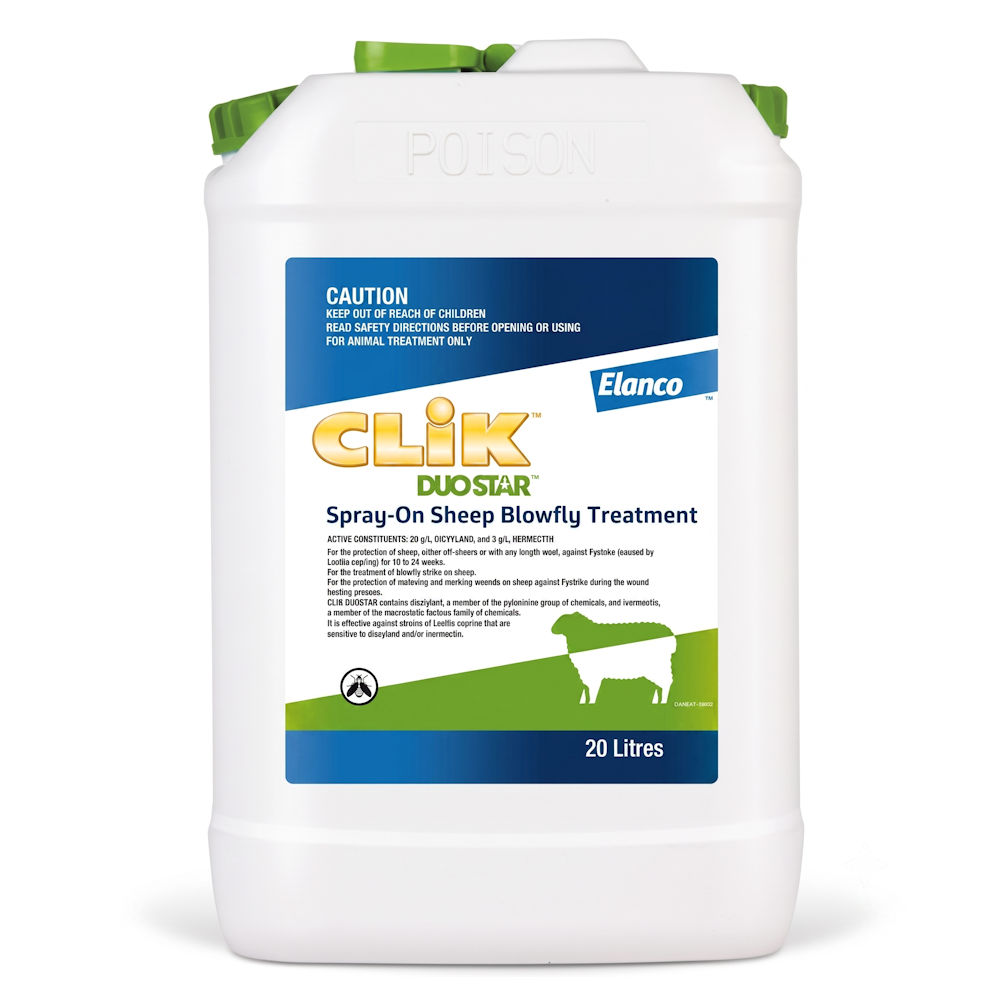
Description
CLiK Duostar Spray-On Sheep Blowfly Treatment is a dual-active spray-on sheep blowfly treatment from Elanco Australasia Pty Ltd. It contains 50 g/L dicyclanil and 3 g/L ivermectin, registered under APVMA approval number 95406/145528. Woolgrowers use it to protect sheep against flystrike caused by Lucilia cuprina. It also treats existing blowfly strike, and protects mulesing and marking wounds while they heal.
Dicyclanil works as an insect growth regulator. It stops first-stage maggots moulting into damaging second-stage larvae. This gives CLiK Duostar its long residual protection of 18 to 24 weeks. Ivermectin adds fast knockdown. It kills first, second and third-stage maggots on contact. As a result, CLiK Duostar treats existing strikes as well as preventing new ones. The two actives work through different mechanisms. Because of this, CLiK Duostar suits flocks managing dicyclanil or ivermectin resistance risk in their fly control programme.
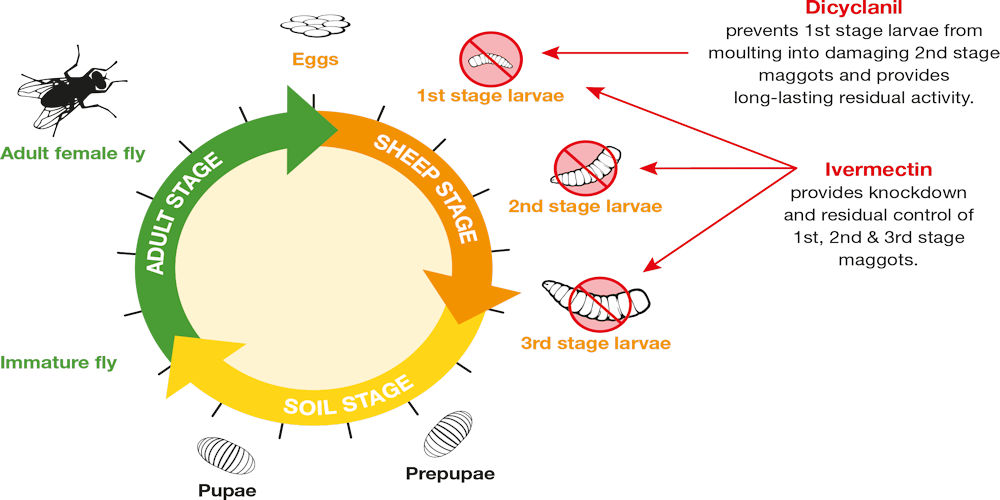
Why CLiK Duostar Works as a Dual-Active Spray-On Sheep Blowfly Treatment
CLiK Duostar protects sheep off-shears or with any length of wool against body, breech and poll strike. It also treats active blowfly strike already present on the animal. In addition, it protects mulesing and marking wounds against flystrike while they heal. Ivermectin also controls sensitive lice as well as fly larvae. Because of this, Elanco recommends aiming for lice eradication at the next scheduled lice treatment after using CLiK Duostar. Re-treat no sooner than 9 weeks after the last application. Also observe the 28-day meat withholding period and the 3-month wool harvesting interval before shearing or fibre collection.
Frequently asked questions
Q. What does CLiK Duostar Spray-On Sheep Blowfly Treatment control?
A. CLiK Duostar controls flystrike caused by Lucilia cuprina. It protects sheep against body, breech and poll strike. It also protects mulesing and marking wounds against flystrike while they heal.
Q. How long does CLiK Duostar protect sheep against flystrike?
A. Protection lasts 18 to 24 weeks. In addition, this covers sheep treated off-shears or with any length wool. Heavy rain or heavy scouring after application can shorten the protection period.
Q. Does CLiK Duostar treat sheep already struck by blowfly?
A. Yes. CLiK Duostar also treats active blowfly strike, as well as preventing it. For strikes 10 cm or more from the original application, apply an extra 5 mL directly onto the struck area. Also remove the wool from struck areas with clippers or shears before this extra application.
Q. What is the withholding period for CLiK Duostar?
A. The meat withholding period is 28 days before slaughter. In addition, the wool harvesting interval is 3 months before shearing or fibre collection. Furthermore, the export slaughter interval is 9 weeks; confirm the current interval with Elanco before export.
Q. Can I use CLiK Duostar after mulesing or marking lambs?
A. Yes. CLiK Duostar protects mulesing and marking wounds against flystrike during healing. Apply two bands over the mulesing wound, overlapping 25 mm onto the surrounding wool. For marking wounds, cover the crutch or tail area where the rubber ring has been applied.
Q. Is CLiK Duostar Spray-On Sheep Blowfly Treatment comparable to CLiK Extra Spray-On Sheep Blowfly Treatment?
A. No. CLiK Duostar and CLiK Extra are different formulations, though both come from Elanco. Both contain dicyclanil, and both protect sheep off-shears or with any wool length against body, breech and poll strike. Both also protect mulesing and marking wounds during healing. CLiK Extra contains 65 g/L dicyclanil only. This gives protection of up to 29 weeks, but Elanco does not recommend it for treating strikes already present. CLiK Duostar contains 50 g/L dicyclanil plus 3 g/L ivermectin. It gives shorter protection, at 18 to 24 weeks, but it also treats existing strike. The meat withholding period differs too: 21 days for CLiK Extra and 28 days for CLiK Duostar. Always compare both labels before choosing between them.





What others are saying
There are no contributions yet.